Something Beyond Words: What Japanese Theater Reveals When American Stages Stop Trying to Explain It
There is a moment in many American productions of Japanese theatrical work when a director makes a fateful decision. Faced with a concept, a gesture, or a spatial relationship that does not yield to easy explanation, they must choose: annotate it for the audience, or trust it.
The productions that trust it are almost always the ones that succeed.
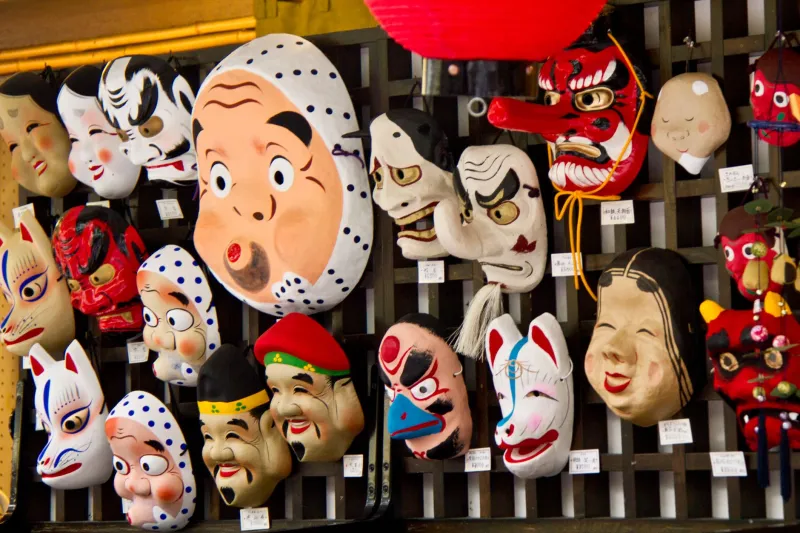
This is the central paradox of Japanese theater on American stages. The concepts that seem most resistant to cross-cultural translation—the aesthetic philosophy of ma, the emotional ideal of yugen, the disciplined ambiguity of the Noh mask—frequently communicate with a directness and power that more culturally legible theatrical forms cannot match. Something in the untranslatability itself becomes the message.
The Problem with Explanation
American theater has a deeply ingrained habit of explanation. It emerges partly from a legitimate commitment to accessibility, partly from commercial anxiety about alienating audiences, and partly from a cultural preference for narrative clarity that runs through almost every dominant American entertainment form. The impulse is understandable. It is also, when applied to Japanese theatrical tradition, almost always counterproductive.
Consider ma—the Japanese concept of meaningful interval, the charged quality of space and silence between events. Any competent program note can define ma in a sentence. What no program note can do is deliver the experience of ma to an audience that has been told, in advance, what to feel when they encounter it.
"The moment you explain ma to an American audience, you've already destroyed it," says theater director and translator Keiko Arima, who has worked extensively on Japanese theatrical productions for American venues. "Because ma is not a concept that the audience needs to understand intellectually. It's something they need to fall into. If you've given them a net—a definition, an explanation—they'll catch themselves before they fall."
This observation points to something important about the nature of the theatrical concepts that Japanese tradition has developed over centuries. They are not primarily intellectual propositions. They are experiential conditions. And experiential conditions cannot be translated—they can only be created.
What Gets Lost
Honesty requires acknowledging what does not survive the crossing. Certain dimensions of Japanese theatrical meaning are so deeply embedded in cultural context that their absence on American stages represents a genuine loss, not merely a transformation.
The emotional resonances of classical Japanese dramatic texts are among the most significant casualties. The great Noh plays draw on a literary and mythological tradition that most American audiences simply do not carry. The specific qualities of grief, longing, and spiritual yearning that these texts invoke are calibrated to a cultural imagination that has been formed by centuries of Buddhist philosophy, Heian court poetry, and the particular Japanese experience of impermanence.
A production of Matsukaze—the Noh masterpiece about two sisters who become ghosts bound to their love for an exiled poet—can move an American audience profoundly. But the specific texture of that movement will differ from what a Japanese audience experiences. The layers of literary allusion, the precise emotional shadings of the original text, the resonances with a shared cultural mythology: these do not travel intact.
"There is always grief in translation," acknowledges scholar and dramaturg Patricia Leung, whose work has focused on cross-cultural Japanese theater productions. "The question is whether the grief is worth the journey. And for Japanese theatrical forms, I think the answer is almost always yes—but only if the production is honest about what it is doing."
What Gets Found
The more surprising and, ultimately, more consequential story is what American productions of Japanese theater sometimes discover that their Japanese counterparts do not.
Familiarity is a form of blindness. Japanese audiences who have grown up within the theatrical traditions of Noh, Kabuki, or Bunraku have developed sophisticated frameworks for experiencing these forms. Those frameworks are assets, but they are also, in a subtle way, filters. They direct attention toward certain elements and away from others. They shape expectation in ways that can, paradoxically, limit the range of what an audience actually perceives.
American audiences, encountering these forms without those frameworks, are sometimes capable of a rawness of reception that produces unexpected discoveries.
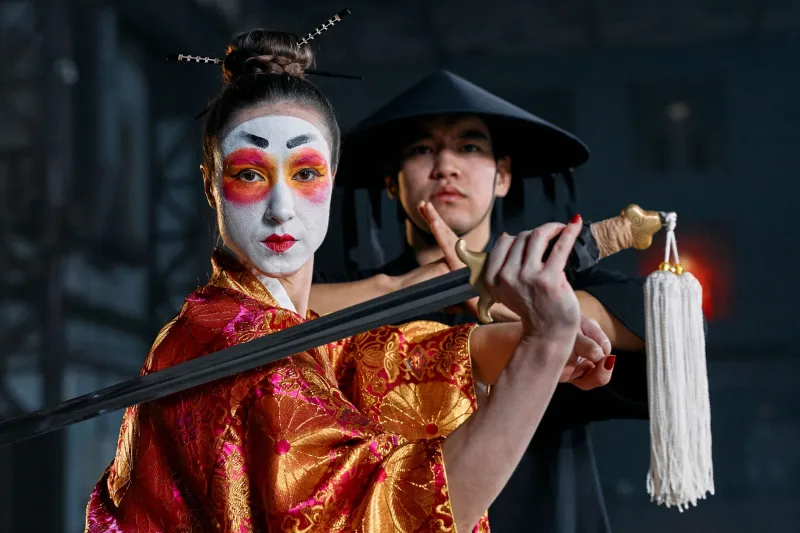
A 2022 production of a Kabuki-influenced work by a Japanese-American theater company in Los Angeles generated significant discussion among both Japanese and American critics for precisely this reason. American audience members, unfamiliar with the conventional readings of the gestures and vocal styles involved, responded to elements of the performance that Japanese critics had largely taken for granted—particularly the formal relationship between stillness and explosive movement that is central to Kabuki's theatrical vocabulary.
"The American audiences were watching the stillness," the production's director noted in a post-show discussion. "Japanese audiences often wait for the movement because they know it's coming. The Americans didn't know, so they were fully present in the pause. And that changed the meaning of the movement when it arrived."
The Productive Mistranslation
Perhaps the most intellectually honest framework for understanding Japanese theater in American contexts is the concept of productive mistranslation—the idea that the errors, gaps, and misreadings that inevitably occur when a theatrical form crosses cultural boundaries are not simply failures of understanding but can be generative events in their own right.
The history of Japanese theatrical influence on American performance is substantially a history of productive mistranslation. Butoh, as practiced and developed by American performers over the past four decades, is recognizably related to its Japanese origins and yet constitutes a distinct art form shaped by the misreadings, recontextualizations, and creative misappropriations of artists working in a different cultural soil.
This is not corruption. It is, arguably, the most authentic form of cultural transmission available—one that acknowledges the impossibility of perfect translation while insisting on the value of the attempt.
Trusting the Gap
For American directors, producers, and audiences engaging with Japanese theatrical tradition, the practical implication of all this is both simple and demanding: trust the gap.
The gap between what a Japanese theatrical concept means within its original cultural context and what it communicates to an American audience is not a problem to be solved through better program notes, more extensive pre-show talks, or more elaborate surtitle systems. It is the site where the most interesting theatrical work happens.
The gestures of Kabuki that an American audience cannot decode intellectually are precisely the gestures that bypass intellectual decoding entirely and communicate directly through the body. The silences of Noh that carry no literary resonance for American ears are precisely the silences that strip theatrical time of its usual noise and reveal something older and less culturally specific underneath.
Japanese theater's deepest meanings are not lost in translation. They are waiting, with characteristic patience, on the other side of the attempt.