Before the Curtain Rises: How Japanese Pre-Show Rituals Are Transforming the American Theater-Going Experience
In most American theaters, the period before a performance begins is treated as dead time—a holding zone of rustling programs, glowing phone screens, and half-finished cocktails from the lobby bar. The curtain is simply a practical boundary between the mundane and the theatrical. Japanese stage tradition sees it entirely differently.
For centuries, the great theatrical forms of Japan have understood that the audience's inner state is as much a part of the performance as the actors' craft. The preparation of the audience—their breathing, their attention, their willingness to surrender ordinary time—is not incidental to the experience. It is the experience's first movement.
Now, a measurable number of American directors, venue administrators, and arts programmers are taking notice.
The Architecture of Anticipation
In traditional Noh theater, the audience's encounter with the performance begins long before the first actor appears. The stage itself—spare, elevated, and geometrically precise—is visible upon entering the theater. There are no elaborate set pieces to obscure it, no theatrical darkness to hide it. The space speaks first, and it speaks of emptiness, of possibility, of waiting.
The hashigakari, the long bridgeway connecting the backstage to the main platform, is left in full view throughout. Audience members settling into their seats are already, without realizing it, being invited into a different relationship with theatrical space. They are not spectators waiting for a show. They are participants entering a ritual.
Kabuki extends this preparation further. The distinctive clacking of the ki—wooden blocks struck together in accelerating rhythm—serves as a formal sonic announcement that the performance world is assembling itself. It is not background music. It is a command, gentle but absolute, to shift one's consciousness.
"When I first experienced a full Kabuki program in Kyoto, I was struck by how the pre-show sounds functioned almost like a guided meditation," says Rachel Whitmore, artistic director of a mid-sized regional theater in the Pacific Northwest who has been gradually incorporating Japanese pre-show elements into her venue's programming. "By the time the first actor appeared, I was already in a completely different mental state than I would have been after sitting through recorded pop music and a generic announcement about turning off cell phones."
Slowing Down as a Radical Act
Whitmore's observation points to something that American theater practitioners are increasingly willing to name directly: the standard American pre-show experience actively works against genuine theatrical engagement.
The contemporary entertainment landscape is engineered for speed and stimulation. Streaming platforms deliver content instantaneously. Social media conditions audiences to process information in fragments. Even the physical design of many American performance venues—with their busy lobbies, aggressive merchandise tables, and time-pressured bar service—prioritizes commercial throughput over contemplative preparation.
Against this backdrop, the deliberate slowness of Japanese pre-show tradition reads not as quaint cultural artifact but as a form of resistance.
The Bunraku puppet theater tradition offers perhaps the most striking example of this resistance. Before a Bunraku performance, the theater is suffused with a particular quality of quiet that is actively maintained by the venue's staff and, through social convention, by the audience itself. The puppets, visible in the wings, are treated with a reverence that extends to the audience's behavior before the performance begins. People speak softly, if at all. The transition from ordinary life into theatrical time is gradual, conscious, and shared.
"What Japanese theater understands, and what we've largely forgotten in America, is that attention is not automatic," says Dr. Marcus Feld, a theater studies scholar at a university in the Northeast who has written extensively on cross-cultural performance practices. "It has to be cultivated. The pre-show period is where that cultivation happens—or doesn't."
American Adoptions and Adaptations
Several American venues have begun experimenting with Japanese-inspired pre-show practices, with results that have surprised even their most skeptical staff members.
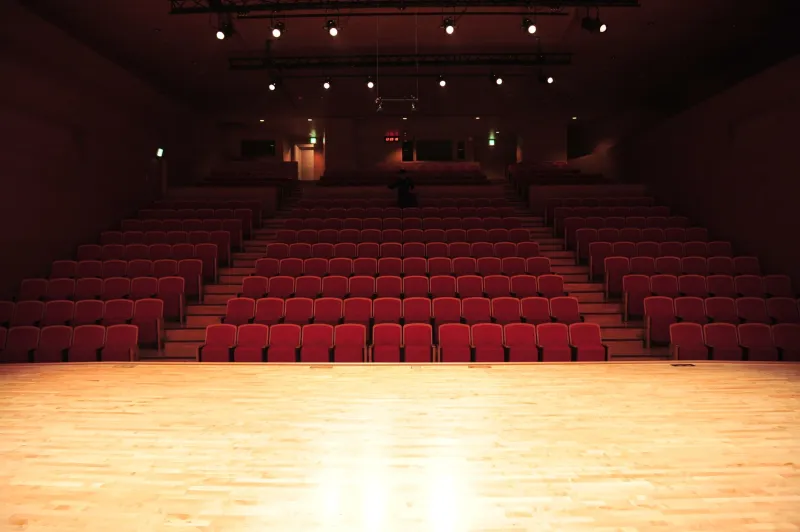
One Chicago-based experimental theater company introduced a practice drawn loosely from Noh tradition: audiences are invited to arrive thirty minutes before curtain and sit in a fully lit, completely silent theater. No music. No announcements. The stage, dressed for the performance, is simply present. Ushers are trained to respond to questions with nods and written notes rather than spoken words.
The company's managing director reported initial resistance from audiences accustomed to more stimulating pre-show environments. Within two seasons, however, post-show surveys indicated that audiences who participated in the silent arrival period rated the emotional impact of the performances significantly higher than those who arrived at the standard time. Several respondents used the word "sacred" to describe the experience—a word that rarely appears in post-show feedback for contemporary American theater.
A New York-based company specializing in Japanese performance adaptations has gone further, incorporating a modified version of the ki-clacking ritual into its pre-show sequence. The sound, unfamiliar to most American ears, functions precisely as it does in its original context: it marks a threshold. Audience members who have attended multiple productions report that they have come to experience a Pavlovian response to the sound—an immediate settling of the nervous system, a voluntary release of the outside world.
What Gets Carried Across the Pacific
Not every element of Japanese pre-show tradition translates without friction. The profound silence of a traditional Noh pre-show is rooted in a cultural relationship with communal quiet that American audiences do not always share. The reverence extended to theatrical space in Japan is inseparable from a broader cultural framework of spatial and social respect that cannot simply be imported wholesale.
American directors who have worked most successfully with these traditions tend to emphasize adaptation over imitation. The goal is not to replicate Japanese ritual but to understand its underlying logic—the deliberate cultivation of collective attention, the marking of a threshold between ordinary and theatrical time, the treatment of the audience's inner life as a legitimate subject of the performance experience—and to find American forms that serve the same function.
"I'm not trying to make my audiences feel like they're in Kyoto," Whitmore notes. "I'm trying to make them feel like they're somewhere that takes their presence seriously. Japanese theater taught me that this is possible, and that it matters enormously."
The Audience as First Performer
Underlying all of these experiments is a philosophical reorientation that Japanese theater has always insisted upon: the audience is not a passive consumer of theatrical product. It is an active participant in a shared event. Its quality of attention, its willingness to arrive fully, its readiness to be changed by what it encounters—these are not peripheral to the performance. They are constitutive of it.
In a cultural moment defined by passive consumption and algorithmic entertainment, this is not a minor claim. It is a fundamentally different theory of what live performance is for and what it asks of the people who attend it.
American theater, at its best, has always believed in the transformative potential of live performance. What Japanese pre-show tradition offers is a set of practical tools for honoring that belief from the very first moment an audience member walks through the door—long before the curtain rises, long before the first word is spoken, in the deliberate, generous, demanding silence of genuine theatrical preparation.