Composing With Quiet: How Japanese Theater Transforms Silence Into Its Most Powerful Performer
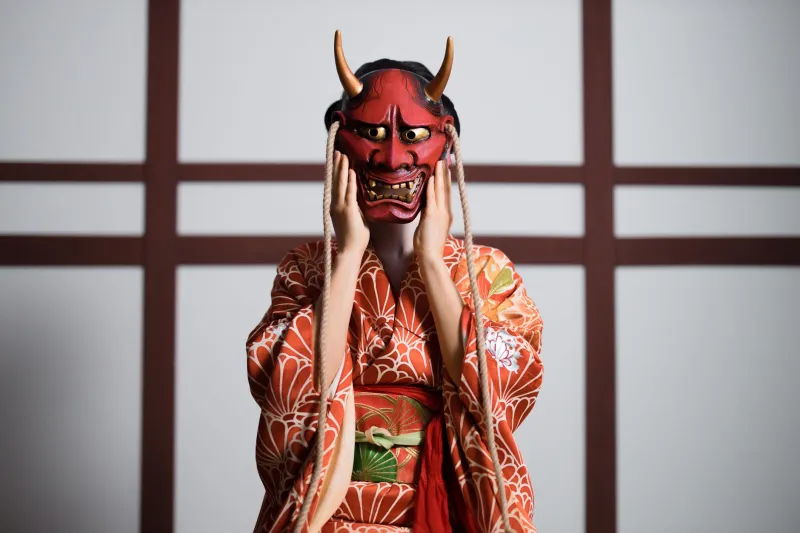
There is a moment in a traditional Noh performance when the flute ceases, the drums withdraw, and the shite — the principal actor — stands utterly still at center stage. The audience does not shift in its seats. It does not cough, consult a program, or exchange glances. It waits, and in waiting, it creates. That interval of sonic emptiness, engineered with the same precision as any musical phrase, is not a pause between events. It is the event itself.
For American theater audiences accustomed to soundscapes layered from overture to curtain call, this experience can initially feel disorienting. Western theatrical convention has long operated on the assumption that unoccupied sonic space signals error — a missed cue, a forgotten line, an awkward transition. Japanese performance traditions operate from precisely the opposite premise: that silence, carefully shaped and deliberately placed, is the most direct invitation a stage can extend to the imaginations of the people watching.
The Architecture of Ma
The Japanese concept of ma — often translated as negative space, pause, or interval — is not a passive condition. It is an active structural element, as load-bearing in its way as any column in a classical theater's architecture. Ma appears across Japanese arts, from the spacing of characters in calligraphy to the arrangement of stones in a Zen garden, but nowhere does it carry more theatrical consequence than on the stage.
In Noh theater, ma governs the relationship between sound and its absence with extraordinary specificity. The drummers who accompany a Noh performance — the kotsuzumi and otsuzumi players — do not simply keep time. They negotiate silence. The calls they emit, known as kakegoe, serve partly as rhythmic markers and partly as signals about the nature of the silence that will follow them. A seasoned Noh audience reads these vocal punctuations the way a jazz listener reads a rest: not as nothing, but as shaped duration with emotional content.
What this means for the viewer is profound. The silence that follows a kakegoe call is not empty. It has been given a character, a tension, a direction. The audience member's mind rushes in to fill it — not with distraction, but with imaginative engagement. The stage becomes a collaborative space rather than a delivery mechanism.
Butoh and the Body as Silent Text
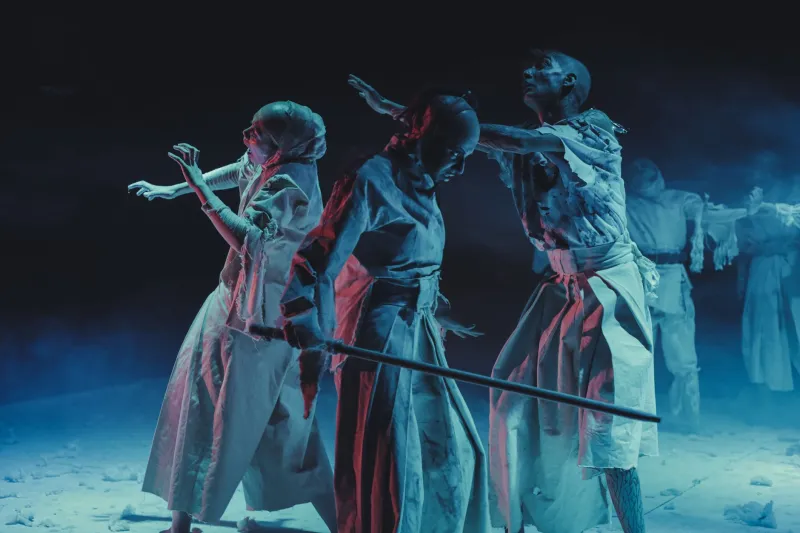
If Noh architects silence through musical convention, Butoh approaches it through the body. The Japanese avant-garde dance form that emerged in the late 1950s, partly in response to the devastation of postwar Japan, treats the performer's physical presence as its own kind of sonic instrument — one capable of producing a quality of silence that ambient sound would only undermine.
In many Butoh works, extended passages unfold with no musical accompaniment whatsoever. The performer moves — often with agonizing slowness — through transformations that the body itself narrates. The silence is not backdrop. It is pressure. It creates a heightened perceptual state in the audience, a sharpening of attention that amplifies the significance of every micro-movement the performer makes.
American audiences who have encountered Butoh at venues such as the Walker Art Center in Minneapolis or the Yerba Buena Center for the Arts in San Francisco frequently report a paradoxical experience: the silence feels loud. This is not metaphor. When the brain is not processing competing audio information, its sensitivity to other stimuli increases measurably. Butoh practitioners have understood this intuitively for decades. The silence is an instrument of perceptual calibration.
Contemporary Japanese Theater's Deliberate Restraint
Beyond classical and avant-garde forms, contemporary Japanese theater companies have continued to develop sophisticated relationships with sonic emptiness. Directors such as Oriza Hirata, whose quiet realism has influenced stages from Tokyo to Europe, construct plays in which characters speak with the naturalistic incompleteness of actual human conversation — trailing off, overlapping minimally, allowing silences that feel inhabited rather than empty.
Hirata's approach, sometimes described as contemporary colloquial theater, treats silence as the substrate from which dialogue emerges rather than as its interruption. The effect on audiences is one of unusual intimacy. Because the silences feel real — because they carry the weight of unspoken thought rather than theatrical convention — viewers become more attentive listeners. They lean forward, metaphorically and sometimes literally, into the space between words.
This stands in instructive contrast to the dominant mode of American commercial theater, where silence is frequently perceived as a liability to be managed. Producers worry about restless audiences. Sound designers fill transitions with ambient underscore. Directors coach actors through pauses at a pace that leaves little room for the audience's imagination to activate. The cumulative effect, however well-intentioned, can be a kind of cognitive crowding — a stage that tells its audience everything, trusting them to receive nothing on their own.
What American Sound Design Might Unlearn
The lessons that Japanese theatrical silence offers to American sound designers are not primarily technical. They are philosophical. The question is not how to produce silence — any designer can mute a speaker — but how to compose it: how to give it shape, intention, and duration that transforms it from absence into presence.
Some American designers are already exploring this territory. Productions at experimental venues such as New York's Skirball Center or Chicago's Steppenwolf have begun incorporating extended passages of genuine quiet, treating them not as failures of imagination but as its highest expression. Directors who have studied or collaborated with Japanese companies report a consistent shift in their relationship to their own material: they begin to trust it more, and in trusting it, they trust their audiences more.
That trust is perhaps the central lesson. Japanese theater's relationship with silence is ultimately a relationship with its audience — an acknowledgment that the people in the seats are not passive recipients of a finished product but active participants in the construction of meaning. When a Noh actor holds his position in silence and the audience holds its breath in response, a circuit closes. The performance becomes genuinely shared.
Silence as Invitation
American theater is, at its best, a profoundly democratic art form — one that has always believed in the capacity of its audiences to meet the work where it lives. Japanese performance traditions suggest that this belief can be enacted most powerfully not through abundance but through restraint: not by giving audiences everything, but by giving them enough, and then stepping aside.
The unseen choreographer at work in Noh's intervals, Butoh's stillness, and Hirata's inhabited pauses is not a director or a sound designer. It is the audience itself, activated by the disciplined absence of noise into its own deepest creative engagement. For American theater makers willing to study that tradition — to sit with its discomfort and discover its rewards — the silence on the other side of the Pacific may turn out to be the most eloquent collaborator they have never heard.