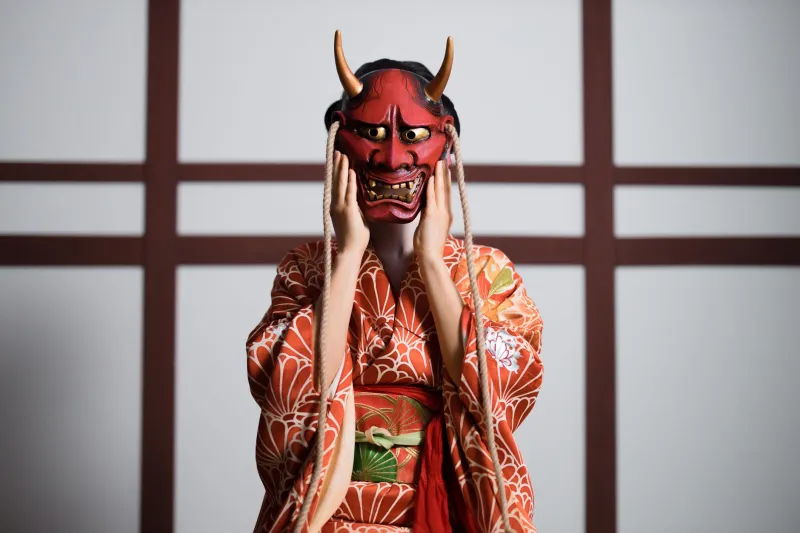
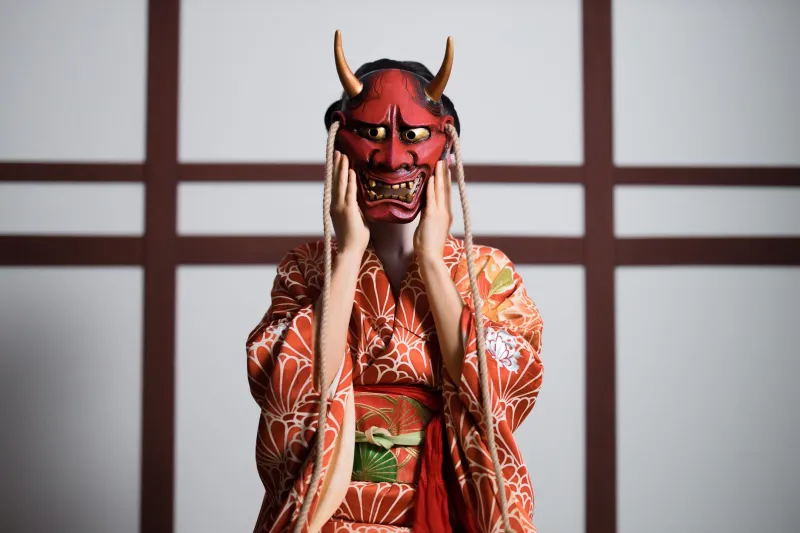
When the Body Speaks First: How Japanese Theater's Codified Physicality Is Giving American Actors a Language Beyond Dialogue
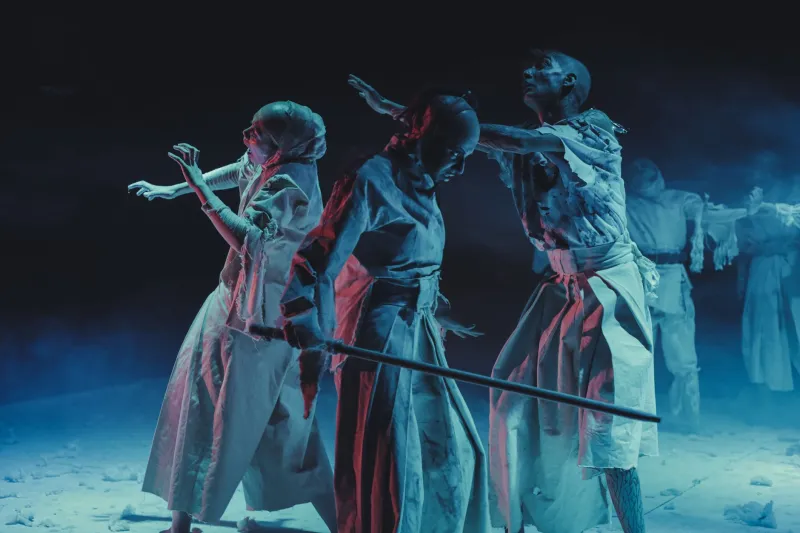
Long before a single word is spoken on the Japanese stage, the body has already delivered its full testimony. A hand arrested in mid-air at a precise angle. A spine curved into a parabola that reads, unmistakably, as grief. A gaze fixed three degrees above the horizon line, signaling not distraction but transcendence. These are not accidents of individual expression. They are a vocabulary — centuries old, meticulously codified, and increasingly relevant to American performers who have spent their careers searching for exactly this kind of physical precision.
Across conservatories, experimental theater companies, and even mainstream Broadway rehearsal rooms, a quiet revolution in actor training is taking shape. Its source material is the geometric rigor of Japanese performance traditions, and its converts are practitioners who once believed that emotional truth lived primarily in the spoken word.
The Architecture of Feeling
To understand why these traditions are resonating so powerfully with American actors, it helps to understand what makes Japanese theatrical physicality structurally different from Western movement approaches.
In Kabuki, the foundational unit of physical expression is the kata — a fixed, inherited form governing everything from how a warrior plants his feet to the precise trajectory of a sleeve during a moment of revelation. These forms are not decorative. Each angle, each arrested gesture, each shift in the distribution of weight carries semantic content. The body, in this framework, is not a vehicle for spontaneous emotional outpouring. It is an instrument tuned to produce specific, legible meanings.
Butoh operates from a different premise but arrives at a similarly disciplined place. Where Kabuki's geometry tends toward the angular and the declarative, Butoh's physicality is sculptural and often deliberately slow — a performer might spend four minutes completing a single turn, their body tracing a shape through space with the unhurried precision of a drawing made in stone. The emotional information encoded in that movement is not vague or impressionistic. It is, paradoxically, more specific for being stripped of the shortcuts that speed and verbal context usually provide.
Noh, the oldest of these traditions, adds another dimension: the relationship between stillness and motion. In Noh, the moments when a performer does not move carry as much expressive weight as the moments when they do. The intervals between gestures are themselves a form of language, and learning to inhabit them without collapsing into mere blankness is one of the most demanding skills the tradition requires.
What American Training Tends to Miss
American actor training, particularly in its post-Stanislavski forms, has long privileged interiority. The dominant question in the rehearsal room — What does my character want? — is fundamentally psychological. The body, in this framework, is understood as the outward symptom of inner life: if the emotional work is genuine, the physical expression will follow organically.
This approach has produced extraordinary performances. It has also produced a generation of actors who are deeply fluent in emotional authenticity and considerably less fluent in physical precision. When the script calls for a complex psychological state — ambivalence layered over desire, grief complicated by guilt — the actor trained exclusively in psychological realism may find themselves reaching for words, or for facial micro-expressions, or for the kind of behavioral business that fills space without necessarily communicating content.
The codified physicalities of Japanese performance traditions offer a different answer to this problem. They propose that certain emotional and psychological states have shapes — that the body, placed in a specific geometric configuration, will produce a specific meaning in a viewer's nervous system, regardless of what the performer is privately feeling, and regardless of whether any words accompany the gesture.
This is a genuinely radical proposition for many American performers. And it is, increasingly, one they are willing to test.
From the Rehearsal Room: Practitioners Speak
Several American stage directors working at the intersection of Eastern and Western performance have noted a consistent pattern: actors who encounter Japanese physical training for the first time often experience an initial resistance, followed by a recognition that feels, in their words, almost physical itself.
One New York-based director who has incorporated Kabuki kata studies into her rehearsal process for contemporary American plays describes the transformation in terms of economy. "American actors are trained to fill," she has noted in discussions with colleagues. "They fill silence, they fill space, they fill ambiguity with behavior. What Kabuki teaches is that a single precisely executed form can do more communicative work than thirty seconds of naturalistic business. The constraint is not a limitation. It's a delivery system."
Actors who have undergone intensive Butoh training report a related but distinct shift. The practice of moving with extreme deliberateness — of tracing each movement through space as though the air itself has resistance — tends to produce a heightened awareness of the body as a spatial object, something that occupies and reshapes the stage environment rather than merely moving through it. For performers accustomed to thinking of stage presence as a quality of personality or charisma, this reframing can be revelatory.
Noh's contribution to American actor development tends to manifest differently still: in the discovery that stillness is not the absence of performance but one of its most concentrated forms. Learning to stand, or sit, or hold a position in a way that reads as inhabited rather than empty is a technical skill, and it is one that Japanese training addresses with a directness that most Western approaches do not.
Constraint as Creative Catalyst
There is a counterintuitive principle at work in all of this, and it is one that Japanese performance traditions have understood for centuries: constraint, rigorously applied, does not diminish expression. It clarifies it.
When an actor is given a precise physical form to execute — a specific angle for the arm, a specific quality of tension in the back, a specific relationship between the gaze and the horizon — they are freed from the infinite, often paralyzing range of choices that open-ended naturalism presents. The form makes the decision. The actor's work becomes not what to express but how fully to inhabit the form that has already determined what will be expressed.
This is why American performers who have engaged seriously with Japanese physical training frequently describe the experience not as restriction but as liberation. The vocabulary, once learned, becomes available. A performer who knows the Kabuki form for suppressed fury, or the Butoh shape for inconsolable longing, carries that knowledge into every rehearsal room and every performance — a portable, reliable, precise instrument for communicating states that dialogue might take pages to approximate.
A Vocabulary Still Being Written
The integration of Japanese physical traditions into American theatrical practice is not a wholesale transplantation. The cultural contexts are different, the theatrical ecosystems are different, and the most thoughtful practitioners are careful to distinguish between borrowing a principle and appropriating a form.
What is being absorbed, at its best, is not Kabuki itself but what Kabuki demonstrates: that the body is capable of a precision and specificity that Western training has often underestimated. That emotion has geometry. That constraint, rather than impoverishing expression, can be the very condition that makes it possible.
For American actors still searching for a physical vocabulary adequate to the complexity of what they are asked to portray, the Japanese stage has something rare to offer — not a ready-made answer, but a rigorously tested proof of concept. The body, it turns out, has always known how to speak. It simply needed the right grammar.