The Art of the Held Breath: What Japanese Theater's Strategic Stillness Is Teaching American Actors About True Stage Presence
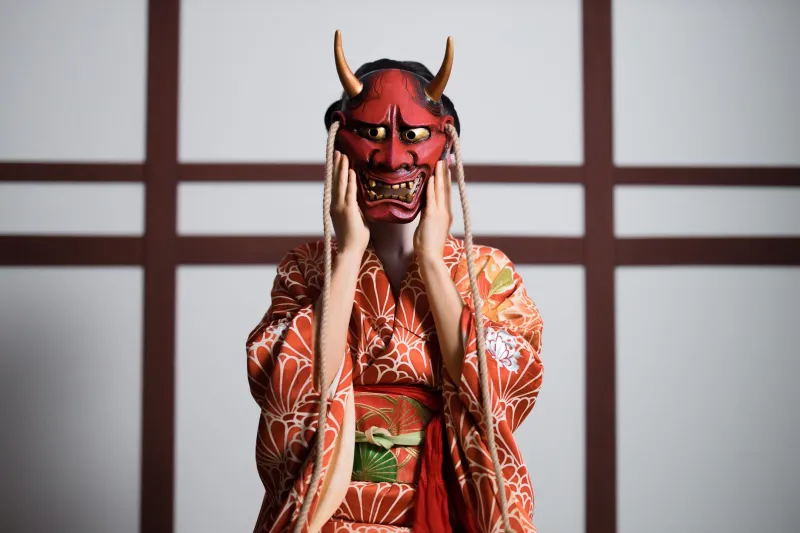
There is a moment in classical Noh performance that Western audiences frequently misread as technical error. The actor has spoken. The musician has resolved a phrase. And then — nothing. No gesture, no adjustment of posture, no nervous glance toward the wings. The performer simply remains, suspended within the architecture of silence, as the audience leans almost imperceptibly forward. That moment is not a pause. It is the performance.
Across American theater schools and regional stages, a quiet revolution is underway. Directors and performers who once trained exclusively in the Stanislavski method or the Meisner technique are now supplementing their craft with principles drawn from Japan's most ancient theatrical traditions. The vehicle for this shift is not movement, dialogue, or dramatic escalation. It is the disciplined, technically demanding, and paradoxically powerful art of doing nothing at all.
What the Traditions Actually Teach
Noh, Butoh, and Kabuki each approach stillness differently, and understanding those distinctions matters enormously when American practitioners attempt to absorb their lessons.
In Noh theater, which dates to the fourteenth century, the concept of ma — often translated as negative space or meaningful interval — governs the relationship between sound, movement, and silence. A Noh actor does not simply pause; they inhabit the pause as a structural element equal in weight to any line of text. The stillness is not absence. It is presence concentrated to its most essential form. Training in Noh demands years of work precisely because achieving authentic ma requires the performer to eliminate every involuntary micro-movement — the unconscious swallow, the slight shift of weight, the reflexive blink — that would betray tension rather than convey it.
Butoh, the avant-garde movement form that emerged in postwar Japan, approaches stillness from a different philosophical direction. Where Noh's pauses are architectural, Butoh's are geological — slow transformations occurring beneath the surface of visible movement. Butoh practitioners often describe the body as a landscape in the process of becoming, and the stillness they cultivate is not stasis but deceleration so extreme that change becomes invisible to the casual observer yet palpable to an attentive audience.
Kabuki, by contrast, deploys stillness as punctuation. The famous mie — a dramatic freeze in which the actor holds a stylized pose at a moment of peak emotional intensity — functions as a kind of visual exclamation point, concentrating the audience's attention precisely when the narrative stakes are highest. Unlike the interior stillness of Noh, mie is theatrical and declarative, designed to be read from the back of a large house.
American Stages, Japanese Intervals
The practical adoption of these principles by American practitioners has taken several distinct forms. At the graduate level, programs at institutions including the American Conservatory Theater in San Francisco and the Yale School of Drama have introduced movement workshops that draw explicitly on Japanese somatic traditions, asking students to explore what their bodies communicate when conventional expressive tools are removed.
Susan Hyon, a New York-based movement director who has worked on productions at Playwrights Horizons and Second Stage Theater, began incorporating ma principles into her rehearsal process after a residency in Kyoto nearly a decade ago. "American actors are trained, almost pathologically, to fill silence," she has observed in interviews with theater educators. "The impulse to justify every pause with visible emotion, to signal to the audience that something is happening internally — it actually undercuts the power of the moment. When you learn to trust the interval itself, you discover that audiences are extraordinarily capable of generating their own emotional experience within the space you give them."
That observation points to one of the more counterintuitive findings emerging from this cross-cultural exchange: strategic stillness does not reduce an audience's engagement. It intensifies it. When a performer removes the scaffolding of continuous expression, viewers become active participants, projecting meaning, anticipating resolution, and investing emotionally in a way that constant stimulation rarely achieves.
The Technical Demand Beneath the Surface
It would be a mistake to romanticize stillness as simply a matter of stopping. Directors and performers who have studied Japanese techniques with any seriousness are quick to emphasize that authentic stillness is among the most technically rigorous skills in the performing arts.
Marcus Webb, a Chicago-based actor who trained briefly with a Noh practitioner during a cultural exchange program, describes the experience as humbling in ways that a decade of conventional training had not prepared him for. "I thought stillness was something I already understood — I'd done plenty of 'less is more' work in film," he recalls. "But Noh stillness is different. It requires you to be simultaneously completely relaxed and completely alive. The moment you relax into comfort, you disappear. The moment you tense up to stay present, you telegraph effort. Finding the line between those two states is genuinely one of the hardest things I've ever attempted."
This demand explains why Japanese theatrical traditions treat stillness not as a stylistic choice but as a foundational discipline requiring years of dedicated practice. The shite — the principal actor in Noh — typically trains for decades before performing lead roles. Much of that training is devoted not to learning texts or choreography but to developing the physical and psychological capacity to sustain authentic presence within stillness.
What Changes When American Productions Listen
The influence of Japanese timing principles is increasingly visible in American productions that might not explicitly announce their debt to these traditions. Reviewers and audiences have noted an unusual quality of attention in certain recent productions — a sense that the performers are somehow more present, more commanding, without necessarily being more active.
This quality is difficult to quantify in critical language shaped primarily by Western theatrical values, but it is consistently remarked upon. Audiences describe feeling unusually absorbed, unusually reluctant to look away. Directors who have incorporated ma principles into their rehearsal processes describe a noticeable shift in the energy of a room when actors begin to genuinely inhabit rather than merely endure the spaces between words.
The broader implication for American theater is significant. In a performance culture that often equates energy with motion and emotion with expression, the Japanese theatrical tradition offers a radical alternative proposition: that the most powerful thing a performer can do is sometimes to stop, to remain, and to trust that in the held breath between one moment and the next, something essential and irreducible about the human experience will make itself known.
A Continuing Conversation
The exchange between Japanese theatrical traditions and American stage practice is neither new nor complete. It is, rather, an ongoing conversation that deepens with each production, each workshop, and each performer willing to submit their instincts to the discipline of stillness.
What Japanese theater offers American performers is not a technique to be borrowed but a philosophy to be absorbed — the understanding that commanding attention and generating movement are not synonymous, and that the most magnetic presence in a room is sometimes the one that has learned, with great difficulty and great patience, to be utterly, powerfully, and purposefully still.


