Slow Motion, Radical Welcome: How Butoh Is Quietly Solving American Theater's Accessibility Problem

There is a particular kind of theater that announces itself loudly — with flashing lights, amplified scores, and rapid scene changes designed to hold an audience in breathless suspension. For many Americans, this is simply the grammar of a night out. For a significant and frequently overlooked portion of the population, however, that grammar is a barrier.
Enter butoh.
The Japanese performance tradition, which emerged from the cultural upheaval of post-war Tokyo in the late 1950s, was never designed with accessibility in mind. Its founders — Tatsumi Hijikata and Kazuo Ohno — were concerned with something far more existential: the body as a site of transformation, grief, and radical vulnerability. Yet in American performance spaces today, butoh's defining characteristics are earning it an unexpected second identity as one of the most naturally inclusive theatrical forms available to audiences with disabilities and neurodivergent conditions.
What Makes Butoh Different
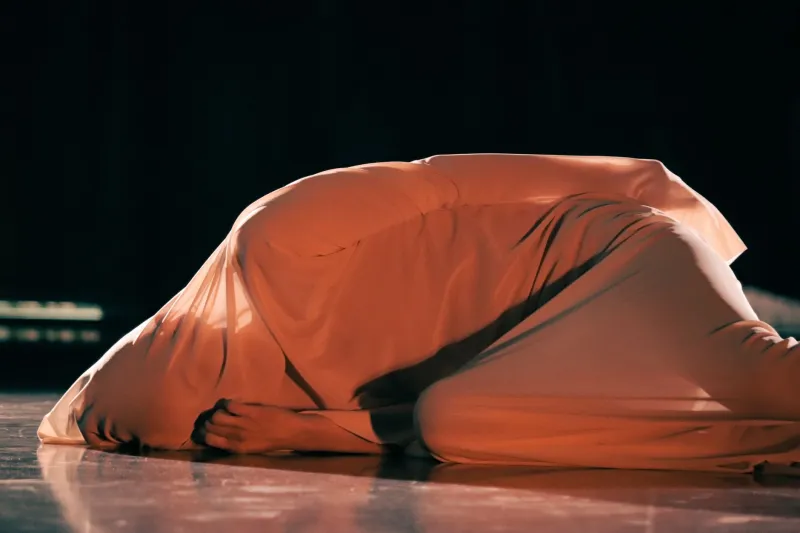
To understand why butoh functions as an accessible art form, one must first appreciate what distinguishes it from virtually every other style of Western or Japanese performance. There is no plot to follow. There is rarely a protagonist. Dialogue is either absent or abstracted beyond conventional meaning. Movement unfolds at a pace that Western audiences often describe as geological — performers may spend ten minutes crossing a single square of stage floor.
For neurotypical theatergoers conditioned by the pace of Broadway or Hollywood cinema, this can be disorienting. For autistic individuals, those with sensory processing disorders, or audience members with anxiety-related conditions, that same quality can be profoundly liberating.
Accessibility consultant Dana Hirsch, who has worked with several contemporary performance venues in the Pacific Northwest, describes the phenomenon in practical terms. "Most theater asks the audience to process multiple simultaneous streams of information — dialogue, staging, music, lighting shifts — and to integrate them quickly. Butoh removes that pressure almost entirely. The audience is invited to observe rather than decode. That distinction matters enormously for people whose nervous systems process information differently."
Productions Leading the Conversation
Several American companies have begun acknowledging butoh's accessibility potential explicitly, rather than allowing it to remain an accidental byproduct.
In Chicago, the ensemble Ankoku Stage Collective — a company founded by Japanese-American choreographer Yumi Tanaka and hearing-impaired performer Marcus Webb — has developed a series of site-responsive butoh works specifically designed for mixed-ability audiences. Their 2023 production Sediment, performed across three evenings in a decommissioned industrial space in Pilsen, incorporated extended pre-show orientation periods, designated low-stimulation viewing areas, and open captioning integrated directly into the scenic design rather than displayed on a separate screen. Audience members were encouraged to move freely throughout the space, leave and return, or simply sit without obligation to maintain conventional theatrical attention.
"We did not set out to make 'accessible butoh,'" Tanaka has noted in public conversations about the project. "We set out to make butoh that was honest about the body — all bodies. The accessibility followed naturally from that honesty."
On the East Coast, New York's Embodied States Festival, which has presented butoh-adjacent work since 2019, began formally partnering with disability arts organizations in 2022. The festival now offers relaxed performances as a standard component of its programming, and its artistic directors have noted that butoh-focused evenings consistently draw the highest proportion of first-time theatergoers among all their programming categories.
The Neurodivergent Audience Speaks
Perhaps the most compelling testimony comes not from choreographers or critics, but from audience members themselves.
Several autistic adults who participated in post-show discussions at a 2024 butoh residency at the Walker Art Center in Minneapolis described the experience in strikingly similar terms. The absence of social cues to interpret — no character relationships to track, no comedic beats requiring a synchronized laugh response — removed a layer of cognitive labor that typically accompanies theatergoing. One participant described it as "the first time I've watched a performance without spending most of my energy managing how I was watching."
This observation aligns with emerging research in sensory processing and the arts. Theater scholars and occupational therapists working at the intersection of performance and disability studies have begun documenting what some are calling the "butoh effect" — the measurable reduction in audience anxiety when exposure to slow, non-narrative performance replaces conventional dramatic structure.
The Philosophical Alignment
There is also a deeper philosophical resonance worth examining. Butoh has always been, at its core, a practice of radical acceptance of the body in all its states — decay, transformation, ambiguity, and vulnerability. Hijikata spoke of the body as a site of darkness that must be acknowledged rather than concealed. Ohno performed into his nineties, his aged and frail form central to the work's meaning rather than incidental to it.
This foundational ethic sits in natural alignment with disability justice principles that have gained significant traction in American performing arts discourse over the past decade. The idea that all bodies carry theatrical meaning — that difference is not deficit — is not a contemporary American invention. It is, in many respects, what butoh has always argued.
Accessibility advocate and wheelchair-using performer Lena Castillo, who has collaborated with butoh artists in the Los Angeles area, frames it directly: "Most Western performance traditions were built around an idealized body — upright, mobile, expressive in particular ways. Butoh was built around the opposite. It was built around the body that suffers, that transforms, that doesn't conform. That's why disabled artists and audiences feel something when they encounter it. It was already about us."
Challenges and Considerations
The alignment between butoh and accessibility is genuine, but it is not without complication. American companies working in this space must navigate questions of cultural stewardship carefully. Butoh is not a neutral aesthetic toolkit available for unrestricted adaptation; it carries specific historical and cultural weight rooted in Japan's post-war experience. Companies that employ butoh principles in accessibility-focused work have an obligation to engage substantively with that lineage — through collaboration with Japanese artists, through rigorous study, and through transparent acknowledgment of the tradition's origins.
There is also the risk of instrumentalizing an art form — reducing butoh to a therapeutic modality rather than honoring it as a complete and complex performance tradition. The most thoughtful practitioners working in this space are careful to maintain the artistic integrity of the form even as they expand its audience.
A Quiet Revolution With Ancient Roots
What is unfolding across American stages is neither a trend nor a marketing strategy. It is the recognition — slow, like butoh itself — that one of Japan's most challenging and uncompromising performance traditions may also be one of its most generous.
For American theaters grappling with how to genuinely welcome the estimated one in four Americans living with a disability, the answer may not require new technology or elaborate accommodation infrastructure. It may require, instead, a willingness to slow down, to release narrative obligation, and to trust that an audience given space and time will find their own profound encounter with what is placed before them.
In that sense, butoh's contribution to American accessibility is not incidental. It is the art form doing precisely what it has always done: insisting that the body, in all its forms, is worth watching.