Close Quarters, Profound Impact: How Intimate American Venues Are Unlocking the Soul of Japanese Theater
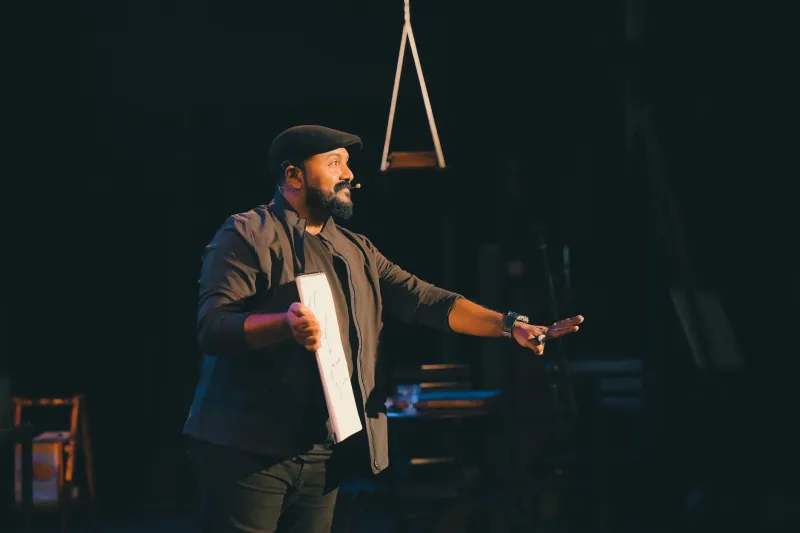
There is a particular kind of silence that settles over a small room when a Kyogen performer freezes mid-gesture—not the polite hush of a darkened Broadway house, but something more visceral. It is the silence of forty people holding their collective breath in a converted warehouse in Brooklyn, close enough to see the tremor in a performer's extended hand. That silence, many are discovering, may be the most important sound in American theater today.
Across the country, an understated but significant shift is reshaping how Japanese performing arts reach American audiences. Producers, venue curators, and performers are converging on an unlikely conclusion: the grandeur of a traditional proscenium stage may actually work against the most essential qualities of Japanese theatrical forms. Intimacy, it turns out, is not a compromise. It is the condition.
The Architecture of Connection
Consider what Japanese theatrical traditions demand of a space. Kyogen, the classical comic form that developed alongside Noh as a form of interlude, relies on precise physical economy—a raised eyebrow, a shifted weight, an abrupt stillness—to generate meaning. On a wide proscenium stage, these micro-gestures dissolve into the middle distance. In a room where the front row sits eight feet from the performer, they land with the force of punctuation.
Shinpa, the melodramatic theatrical genre that emerged in the Meiji era as a bridge between traditional Japanese performance and Western dramatic structure, presents a different but equally spatial challenge. Its emotional intensity is calibrated for proximity. The genre's hallmark—a kind of heightened psychological realism that stops just short of operatic excess—requires audiences to read faces, not just follow plot. In a 300-seat black box theater in Chicago's Pilsen neighborhood, that reading becomes possible in ways that a 1,500-seat house simply cannot accommodate.
Venue curators who have navigated both settings speak with striking consistency about this dynamic. The curatorial director of a Los Angeles-based performing arts center that has hosted Japanese experimental companies for nearly a decade describes the difference in architectural terms: "A large stage imposes a frame around the performance. A small space removes the frame entirely. What you're left with is just the act itself, and the people witnessing it."
When the Room Becomes a Collaborator
Perhaps the most compelling case for intimate staging comes from the world of contemporary Japanese experimental theater—the lineage of companies that emerged from the underground angura movement of the 1960s and continues to produce some of the most formally adventurous work in global theater. These companies have long treated the performing space not as a neutral container but as an active participant in the theatrical event.
When companies working in this tradition perform in American black box venues or site-specific locations—a decommissioned factory floor in Detroit, a narrow gallery corridor in San Francisco's Tenderloin district, a low-ceilinged room in a converted Midwestern church—something unexpected occurs. American audiences, accustomed to the clear spatial hierarchy of traditional theater, find themselves disoriented in productive ways. The usual psychological distance between observer and observed collapses, and with it, many of the interpretive habits audiences bring to performance.
Performers who have worked in both large and small American venues describe this collapse as a kind of gift. One actor with extensive experience in Noh-influenced contemporary work notes that intimate spaces force a different quality of attention from audiences—and, by extension, from performers themselves. "In a big theater, you project. In a small room, you inhabit. The work changes because the relationship changes."
The Audience as Witness, Not Spectator
There is a conceptual distinction at the heart of this conversation that deserves careful attention. Japanese theatrical traditions, broadly speaking, tend to conceive of the audience not as passive consumers of spectacle but as active participants in a shared ritual or social event. This conception is embedded in the spatial grammar of traditional Japanese performance spaces—the hanamichi runway of Kabuki that extends through the audience, the sparse Noh stage that leaves so much to the imagination of the gathered community.
Intimate American venues, perhaps inadvertently, replicate something of this spatial philosophy. When an audience member in a black box theater can hear the breath of the performer three rows ahead of them, they are no longer simply watching. They are present in a more complete sense—morally and physically implicated in what unfolds.
American theatergoers who have encountered Japanese work in these settings frequently describe the experience in terms that distinguish it sharply from conventional theatrical attendance. A Chicago-based audience member who attended a Kyogen double bill in a 60-seat storefront theater described the evening as "uncomfortably intimate in the best possible way—like being let in on something private." That sense of privileged access, of being trusted with something not meant for mass consumption, is precisely what intimate staging enables.
Practical Realities and Curatorial Vision
It would be misleading to suggest that the move toward intimate venues is purely aesthetic. Practical realities shape the landscape considerably. Japanese touring companies, particularly smaller experimental ensembles, often lack the production budgets required to fill large American stages with technically demanding stagecraft. Intimate venues reduce overhead, simplify logistics, and allow companies to tour more sustainably.
But curators who have worked with these practical constraints consistently report that the limitations have produced unexpected artistic dividends. When a company cannot rely on elaborate scenic design or sophisticated lighting rigs, the performance itself must carry the full weight of the evening. Japanese theatrical traditions, many of which developed under conditions of deliberate material restraint, are extraordinarily well suited to this demand.
The curatorial challenge lies in selecting venues that honor the specific spatial requirements of each tradition. Kyogen and Noh-adjacent work generally benefit from a sense of defined, almost ceremonial space—even a modest one. Shinpa and contemporary experimental work may thrive in more fragmented or unconventional configurations. Getting this matching right requires a curatorial sensibility that goes beyond booking logistics into genuine dramaturgical thinking.
A Different Kind of Broadway Dream
The American theater industry has long measured success in terms of scale—larger houses, broader audiences, longer runs. The quiet success of Japanese theatrical traditions in intimate American venues suggests a different metric may be worth considering: depth of encounter rather than breadth of reach.
This is not an argument against ambition. It is an argument for precision. The most powerful American theater moments being generated by Japanese performance traditions are not happening in the grandest rooms. They are happening in the smallest ones—where the distance between a performer's gesture and an audience member's understanding has been reduced to almost nothing, and where that nearness changes everything.
For American audiences willing to seek out these experiences, the reward is a form of theatrical encounter that the conventional stage rarely delivers: not the comfortable pleasure of watching, but the more demanding and more lasting experience of being genuinely present.