Unmasking the Actor: How Kabuki's Onnagata Tradition Is Liberating American Men on Stage
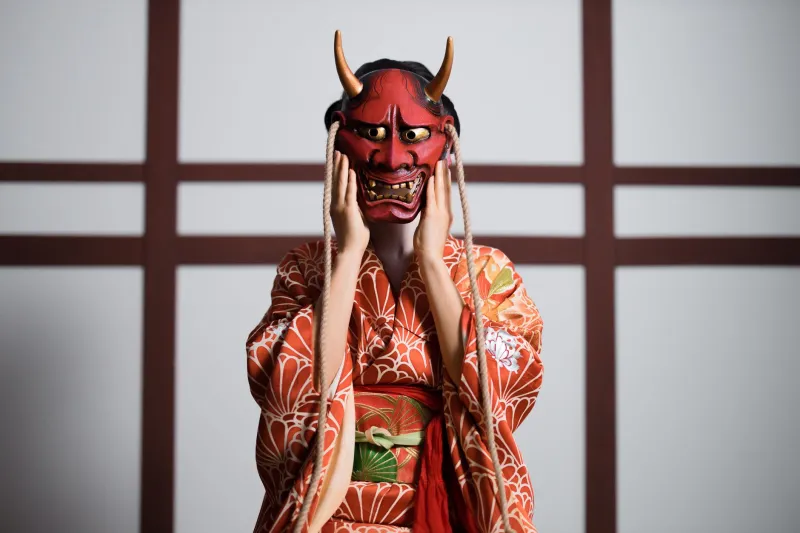
There is a moment in onnagata training when the pursuit of femininity quietly ceases to be the point. The hands soften, the gaze turns inward, the breath slows — and something else entirely takes over. For the male kabuki specialists who have refined this art across four centuries, that something else is the disciplined cultivation of jo — an interior stillness that renders the outward performance luminous. Increasingly, American theater practitioners are discovering that same transformation, and what they are finding is not a lesson in gender imitation but a radical expansion of what the male body can express.
A Tradition Built on Paradox
Onnagata — literally "woman role" — emerged in the late seventeenth century after the Tokugawa shogunate banned women from the kabuki stage. What began as a practical workaround evolved into one of the most technically demanding and philosophically complex performance disciplines in world theater. The great onnagata masters did not simply impersonate women; they distilled an idealized essence of femininity, filtered through a male body and a deeply codified physical vocabulary. The result was something neither straightforwardly male nor female — a third presence that audiences found more compelling than either.
That paradox is precisely what is drawing contemporary American artists to the form. In an era when theater makers are actively interrogating fixed notions of gender, the onnagata tradition offers something that neither drag performance nor conventional cross-casting quite provides: a centuries-tested methodology for inhabiting a role that transcends the performer's own identity without erasing it.
Finding the Technique Beneath the Tradition
For many US-based actors and directors, the entry point into onnagata work is not the elaborate costuming or the white-painted face — it is the physical training itself. The discipline begins with posture: a lowered center of gravity, turned-in knees, a spine that carries tension differently than everyday movement allows. From there, practitioners move into gesture work, learning the precise angles at which the hands speak, the way a sleeve is managed, the economy of motion that makes each movement feel inevitable rather than decorative.
New York-based movement director Cassandra Lyle, who has incorporated onnagata-derived exercises into workshops at several off-Broadway institutions, describes the effect on her male students as consistently surprising. "They come in expecting to learn how to move like women," she has noted in public conversations about her pedagogy. "What they discover instead is how to move with intention. The technique strips away the habitual physicality that most American actors don't even know they're carrying."
That habitual physicality — the unconscious swagger, the spatial claiming, the muscular defensiveness that many male performers bring to the stage without awareness — is precisely what onnagata training disrupts. The discipline demands a quality of presence that American actor training rarely prioritizes: the ability to be looked at without performing.
The Emotional Dimension
Beyond the physical, practitioners consistently report that onnagata work opens access to emotional registers that conventional training leaves underexplored. This is partly a function of the technique's demands: when the body is occupied with precise, controlled movement, the usual psychological defenses that actors deploy — the reaching for emotion, the manufacturing of feeling — become structurally impossible. What remains tends to be quieter, more specific, and more genuinely affecting.
Chicago-based actor and director Marcus Thorn, who spent two months studying with a kabuki-affiliated instructor in Kyoto before returning to develop original work for his ensemble company, describes the experience as fundamentally reorienting. "I had been trained to externalize," he explains. "Onnagata training taught me that the audience will do the emotional work if you give them something precise to look at. You don't have to hand them the feeling — you hand them the form, and the feeling arises in them."
This inversion of the conventional American acting model — in which emotional authenticity is understood as the source from which physical expression flows — has significant implications for how male performers approach roles that require vulnerability, grief, or tenderness. The onnagata tradition suggests that the physical form can be the gateway rather than the product of interior experience.
Gender Fluidity as Artistic Practice
What makes the current wave of American interest in onnagata particularly resonant is its timing. Theater makers across the country are actively seeking performance frameworks that move beyond binary gender representation, and many of the tools available — drag, camp, Brechtian distancing — carry specific cultural associations that can limit their application. The onnagata tradition, by contrast, arrives without those associations, offering a rigorous and historically grounded alternative.
For some practitioners, the appeal is explicitly political. Los Angeles-based playwright and director Soren Adeyemi, whose recent production at a prominent West Coast experimental theater incorporated onnagata movement principles into a contemporary narrative about masculinity in crisis, argues that the tradition's very foreignness is part of its power. "American audiences come to it without preconceptions," Adeyemi observes. "They don't know what they're supposed to think about a man moving this way. That uncertainty is productive. It creates space for genuine inquiry."
For others, the interest is primarily artistic rather than political — a search for technique that yields results unavailable through other means. Either way, the outcomes tend to converge: performers who engage seriously with onnagata training report a lasting shift in how they inhabit their bodies on stage, regardless of the role or the gender it represents.
Navigating Cultural Stewardship
The growing American engagement with onnagata practice raises legitimate questions about cultural stewardship. Kabuki is a living tradition, actively practiced and rigorously protected in Japan, where onnagata roles are still passed down through family lineages and formal apprenticeship structures that take years to navigate. American practitioners who draw on this tradition bear a responsibility to engage with it honestly — acknowledging its origins, seeking qualified instruction, and resisting the temptation to reduce a complex discipline to a set of exotic gestures.
The most thoughtful American practitioners are acutely aware of this responsibility. Many have sought direct instruction from Japanese teachers, studied the historical and philosophical literature surrounding the form, and been transparent with their audiences about the lineage from which their work draws. This careful approach is not merely ethically correct — it is also, practically speaking, what makes the work effective. The onnagata tradition yields its deepest insights only to those who approach it with genuine rigor and respect.
A Living Inheritance
The paradox at the heart of onnagata — that a tradition defined by male performance of femininity should become a tool for dismantling gender constraints — is, upon reflection, entirely consistent with the form's deepest logic. The great onnagata masters always understood that they were not performing women; they were performing something beyond the categories available to them. That aspiration toward a presence that exceeds ordinary identity is precisely what makes the tradition so vital, and so transferable.
For American male actors willing to undertake the discipline, the reward is not the ability to play women more convincingly. It is the discovery that the self they bring to the stage is larger, stranger, and more capacious than they had previously understood. In that discovery, an ancient Japanese art form is doing something quietly radical in American theater — not by importing its aesthetics, but by transmitting its wisdom.


