Breathing Room: What American Directors Are Learning From Japan's Theater of Silence

Photo by Photo by Рома Морозов on Unsplash on Unsplash
In an era when American stages are crowded with rapid-fire dialogue and relentless pacing, a quieter revolution is underway. A growing number of US directors are turning to the deliberate silences and rhythmic restraint of Japanese theatrical traditions — and discovering that what is left unspoken can carry more weight than any scripted line.
The Architecture of Emptiness
Western theatrical convention has long operated on the assumption that momentum is built through words. Characters speak; plots advance; audiences follow. But in the classical Japanese performance traditions of Noh and Kabuki, the opposite logic often governs: momentum is not created by filling space, but by shaping it.
In Noh theater, the concept of ma — a term that translates, imprecisely, as "pause" or "negative space" — is not a gap between actions. It is itself a form of action. A trained Noh performer may hold absolute stillness for a measure that would feel agonizing to a Western audience conditioned by television drama. Yet within that stillness, emotional information accumulates. The audience leans forward. The air in the theater changes.
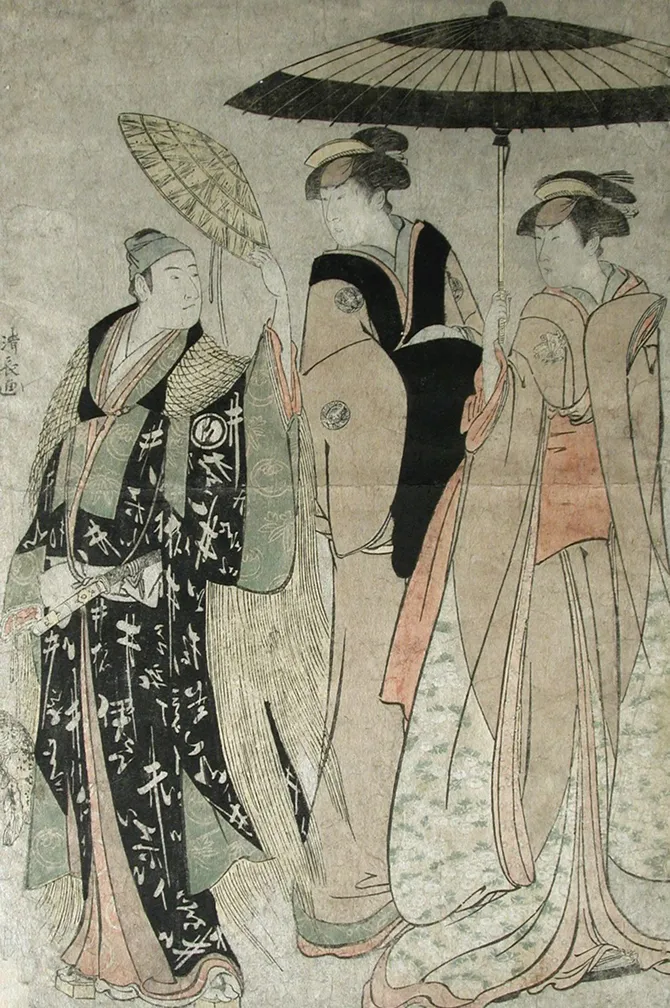
Kabuki employs a related but distinct principle: mie, the frozen, exaggerated pose that punctuates a scene's emotional peak. Where a Broadway production might underscore a climactic revelation with a swell of orchestration, a Kabuki actor plants his feet, crosses his eyes, and simply — stops. The audience responds not with confusion but with a visceral, almost involuntary recognition that something significant has arrived.
American Directors at the Source
For director Anne Kauffman, whose work has graced stages from the Atlantic Theater Company in New York to the Steppenwolf Theatre in Chicago, an extended research residency in Japan a decade ago permanently altered her understanding of theatrical time. "I came back unable to tolerate what I'd been doing," she has noted in conversations with colleagues. "We were filling every silence out of anxiety. We were afraid the audience would leave — emotionally, not physically — if we gave them a moment to actually feel something."
That anxiety, she argues, is culturally specific. American entertainment — shaped by commercial television, the Hollywood screenplay, and the Broadway musical — has trained audiences and practitioners alike to equate silence with failure. A pause is a dropped line. A slow scene is a pacing problem. The result, for many observers, is theater that tells rather than evokes.
The Japanese approach, by contrast, trusts the audience. It presupposes a viewer who is not a passive recipient of information but an active participant in the construction of meaning. The silence between two characters in a Noh piece does not mean nothing is happening. It means everything is happening — inside the audience member.
Translating Rhythm Into Contemporary Practice
How, practically, does a director schooled in the Western tradition begin to incorporate these principles? The process is neither simple nor uniform, and practitioners are quick to caution against superficial borrowing.
Director Ping Chong, a longtime New York-based artist whose work has long drawn on Asian performance aesthetics, has spoken extensively about the discipline required to introduce genuine ma into a contemporary American production. "You can't just tell an actor to pause longer," he has explained. "The pause has to be inhabited. It has to be earned by everything that came before it. Otherwise it's just a hole in the scene."
This distinction — between a pause that is inhabited and one that is merely empty — is perhaps the central lesson American directors are extracting from their engagement with Japanese forms. In Noh, a performer spends decades learning to fill silence with internal presence. The stillness is not an absence of performance; it is performance at its most concentrated.
Some directors are approaching this challenge through structural means, building pauses into the written architecture of a production rather than leaving them to the discretion of individual performers. Others are working directly with movement coaches trained in classical Japanese forms, using the physical discipline of Noh or Butoh as a foundation for rehearsal processes that teach actors to be comfortable — and compelling — in stillness.
The Screenwriter's Inheritance
The influence of Japanese theatrical timing has not remained confined to the live stage. A number of American screenwriters and television showrunners have begun to articulate a conscious debt to Japanese pacing principles, particularly as prestige television has granted writers more latitude to deviate from the relentless forward motion of conventional commercial drama.
The long, wordless sequences that characterize certain celebrated contemporary series — moments in which a character simply exists, processing something too large for dialogue — bear a recognizable kinship to the ma of classical Noh. Whether their creators arrived at this approach through direct exposure to Japanese theater or through independent artistic instinct, the convergence is striking.
Playwright Young Jean Lee, a Korean-American writer whose work has been produced across the United States, has spoken about the influence of Asian performance traditions on her understanding of theatrical time. Her productions frequently resist the explanatory impulse of Western drama, leaving characters to inhabit uncomfortable silence rather than articulating their inner states for the audience's convenience.
What the Silence Is Actually Saying
At its most fundamental level, the Japanese theater of silence is making an argument about where meaning lives. Western dramatic tradition tends to locate meaning in language — in the speech, the monologue, the confrontation. Japanese theatrical tradition distributes meaning more broadly, across the body, the breath, the interval between sounds.
For American directors absorbing these lessons, the practical implication is both liberating and demanding. Liberating, because it expands the toolkit available to a production beyond dialogue. Demanding, because it requires a level of craft and intentionality that cannot be faked. An audience can feel the difference between a silence that has been shaped and one that has simply been permitted to happen.
The productions that have most successfully integrated Japanese rhythmic principles into American theatrical contexts tend to share a common quality: they make the audience aware of their own breathing. That awareness — that slight self-consciousness about the body's most involuntary act — is perhaps the clearest sign that something genuinely theatrical is occurring. The silence is not empty. It is full of the audience itself.
As American theater continues to search for new forms of emotional authenticity, the lessons encoded in centuries of Japanese performance practice offer a quietly radical proposition: that the most powerful thing a director can do, in any given moment, is nothing at all.