Behind the Mask of Femininity: How Onnagata Masters Are Redefining Gender on the American Stage
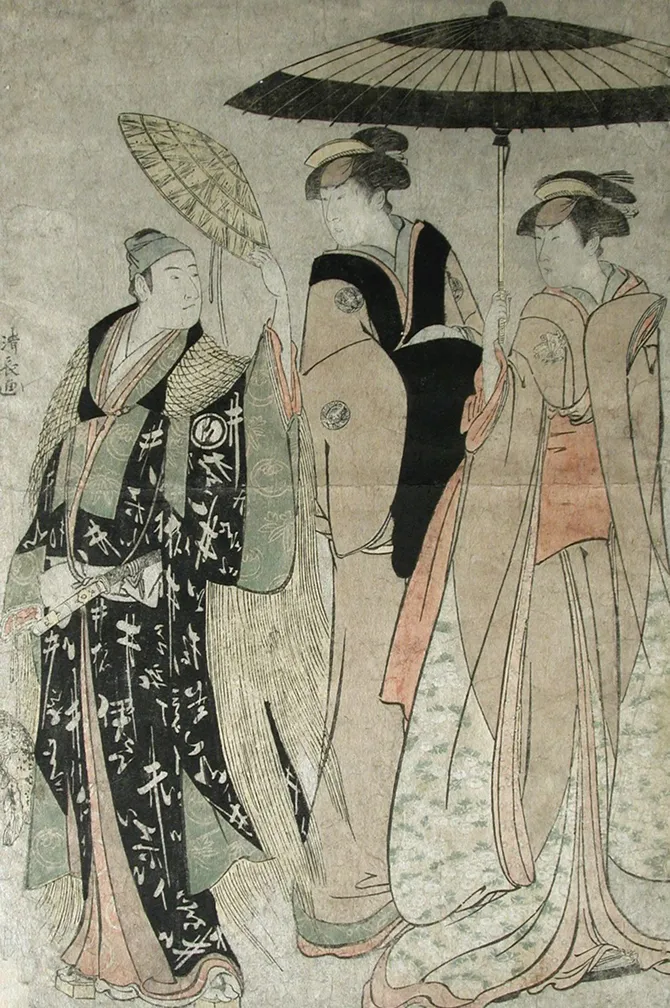
Photo: thesandiegomuseumofartcollection, Public domain, via Wikimedia Commons
There is a particular moment in a skilled onnagata's performance when the audience stops thinking about biology entirely. The tilt of a wrist, the precise angle of a lowered gaze, the measured breath before a line of dialogue — these details accumulate into something that transcends imitation and becomes, by any meaningful theatrical standard, a complete human being. That this complete human being is constructed by a man, trained from childhood in an art that predates the modern concept of gender identity by several hundred years, is precisely what makes the onnagata tradition one of the most intellectually compelling practices in world theater.
American audiences have long encountered kabuki through documentary footage, museum exhibitions, and the occasional touring production. Yet the growing presence of onnagata performers and kabuki-influenced works on US stages has prompted a more immediate reckoning — one that sits at the intersection of theatrical history, contemporary identity politics, and the fundamental question of what performance actually does.
A Tradition Born of Prohibition
The onnagata role emerged not from artistic preference but from governmental decree. In 1629, the Tokugawa shogunate banned women from kabuki performances, citing concerns about public morality. Male actors stepped into female roles and, over the following decades, developed a codified vocabulary of movement, vocal production, and psychological inhabitation that became one of the most rigorous performance disciplines in Japanese cultural history.
What distinguishes onnagata from simple cross-dressing is the depth of that codification. Practitioners do not merely wear women's clothing; they study a system of physical principles — the positioning of the elbows close to the body, the characteristic inward turn of the feet, the specific manipulation of kimono sleeves — that collectively produce a heightened, idealized femininity. Dr. Leila Matsuda, a theater historian at the University of California, Los Angeles, who has written extensively on kabuki's influence in the West, describes this as "femininity as philosophy rather than biology. The onnagata is not impersonating a specific woman. He is embodying a cultural ideal, and that distinction changes everything about how we receive the performance."
The Paradox That Draws Western Eyes
For American theatergoers shaped by decades of casting philosophies that prioritize authentic lived experience — movements that have rightfully expanded opportunities for performers of marginalized identities — the onnagata presents an apparent contradiction. Here is a tradition in which men not only play women but have historically been considered the definitive interpreters of femininity on the kabuki stage.
Yet many US theater scholars argue that this apparent paradox is precisely the source of the form's contemporary relevance. "The onnagata makes the construction of gender visible in a way that naturalistic theater actively conceals," notes James Okafor, a dramaturg based in New York who has collaborated on several kabuki-influenced productions in the past five years. "When you watch a great onnagata, you are watching someone build femininity in real time, gesture by gesture. That is a profoundly useful thing for any audience to witness, regardless of where they stand on casting politics."
This argument gained renewed traction following a 2023 production at a prominent Chicago theater company that incorporated onnagata technique into an otherwise contemporary narrative about family and inheritance. The production's lead performer, who had trained briefly under a Tokyo-based kabuki master during a cultural exchange program, described the experience as "unlearning every instinct I had about how to play a woman naturally. The onnagata approach asks you to be precise where you would normally be intuitive, and that precision paradoxically creates something more emotionally true."
Practitioners Speak
Among the most compelling voices in this conversation are the onnagata performers themselves, several of whom have participated in international exchange programs that bring them into direct contact with American theater communities. Nakamura Jakuemon V, speaking through an interpreter during a symposium held at the Japan Society in New York, described the discipline as inseparable from a performer's entire way of living. "In the classical tradition, the onnagata does not simply perform femininity on stage and then abandon it offstage," he explained. "The study is continuous. It shapes how you move through the world, how you perceive beauty, how you understand other people."
This totality of commitment is one reason why theater educators in the United States who have incorporated onnagata principles into their curricula report transformative effects on students regardless of gender identity. At a conservatory in the Pacific Northwest, a movement instructor who studied in Kyoto has introduced onnagata-derived exercises as a tool for all students to examine their physical habits and assumptions. "When a female student attempts onnagata technique, she often discovers that the codified version of femininity she is studying is both familiar and completely foreign to her own experience," the instructor observed. "That gap is where the learning happens."
Recent US Productions and Evolving Conversations
Several American theater productions in recent seasons have engaged directly with onnagata tradition, though their approaches vary considerably. Some have imported the form relatively intact, presenting kabuki excerpts with trained or semi-trained onnagata performers as educational and artistic events. Others have used onnagata principles as a conceptual framework for original works, borrowing the vocabulary of heightened, codified femininity and applying it to stories rooted in American cultural experience.
A 2024 off-Broadway production that drew significant critical attention cast a male performer trained in both kabuki and contemporary physical theater in a role that moved fluidly between onnagata convention and realistic acting style. Reviewers were divided, but the production generated precisely the kind of conversation that the form seems designed to provoke. Several audience members interviewed after performances described a shift in their perception that they struggled to articulate — a sense that they had been shown something about the nature of femininity that they had not previously considered.
Why the Enigma Endures
The onnagata tradition persists not because it resolves questions about gender representation but because it refuses to. It is a form that holds contradiction in productive tension, honoring a centuries-old discipline while remaining urgently relevant to contemporary debates about identity, performance, and the relationship between the two.
For American audiences increasingly familiar with the language of gender fluidity and performativity, the onnagata offers something rare: a theatrical tradition that has been asking these questions for four hundred years and has arrived not at answers but at an ever-deepening practice. That practice, carried onto American stages with growing frequency, continues to do what the greatest theater has always done — it makes the familiar strange, and in doing so, makes it visible again.