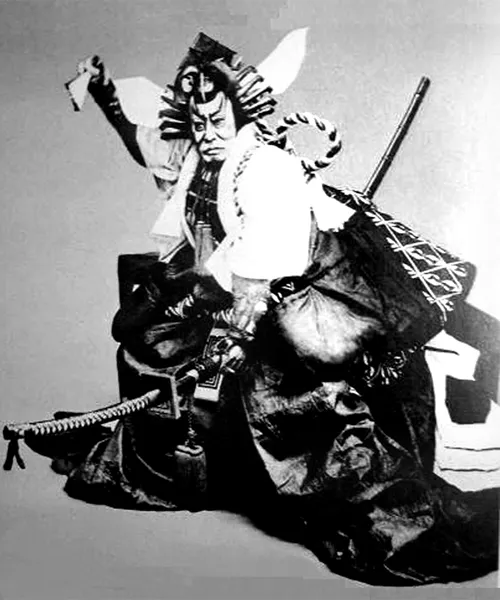
The Power of Nothing: How Japanese Stagecraft's Empty Space Is Remaking American Avant-Garde Theater
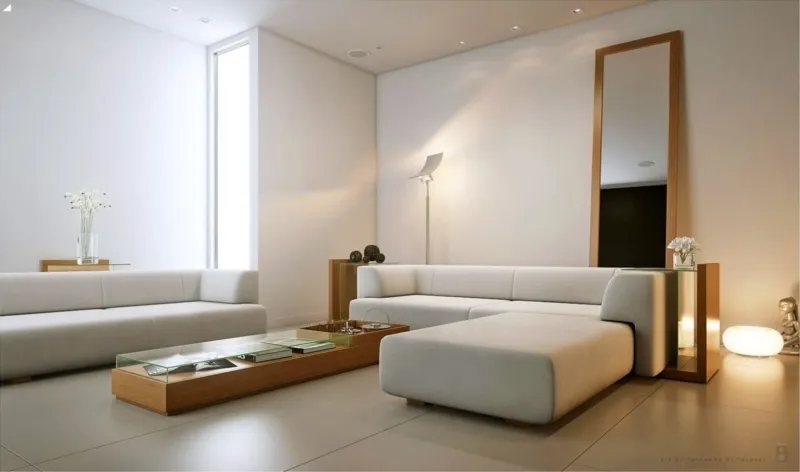
Photo: minimalist theater stage empty space dramatic lighting experimental performance, via mmminimal.com
There is a moment in certain productions — increasingly common in American experimental theater over the past decade — when the set simply stops trying. A single wooden chair. A rectangle of white light on a bare floor. Perhaps a length of silk suspended in darkness. The audience leans forward. Something is about to happen, and the emptiness itself seems charged with anticipation.
This is not minimalism for its own sake. Directors and designers working in this mode will tell you, with remarkable consistency, that they are drawing from a well much older and deeper than American postmodernism. They are working, consciously or not, from principles embedded in Japanese theatrical traditions that have shaped performance for centuries.
The phenomenon is real, documented, and accelerating. From storefront theaters in Chicago to black-box spaces in Brooklyn, from university stages in Los Angeles to repertory companies in Seattle, a generation of American theater makers is absorbing the philosophy of ma — the Japanese concept of meaningful negative space — and applying it to productions that are finding enthusiastic audiences precisely because they offer something Broadway cannot: silence that means something.
What Japanese Stagecraft Actually Teaches
To understand why these principles resonate so powerfully with American practitioners, it helps to examine what they actually are — and to resist the temptation to reduce them to a single tradition.
Noh theater, which dates to the fourteenth century, operates through extreme economy. The stage is largely bare. Performers move with extraordinary deliberateness. A single gesture — the slow raising of a hand toward a face — can convey grief more devastating than any naturalistic breakdown. The philosophy is not about removing things arbitrarily; it is about ensuring that everything present carries weight.
Butoh, the post-World War II Japanese dance-theater form that emerged partly as a response to trauma and cultural disruption, takes this further still. Butoh performers treat the body itself as the primary set, moving through states of physical transformation that make conventional stage design feel redundant. The space around the performer becomes active, shaped by what the body does within it.
Contemporary Japanese stage designers — figures whose work is increasingly visible at international theater festivals, including productions that have toured to American venues — have developed a sophisticated vocabulary of symbolic props and architectural restraint that descends from these traditions. A single cherry blossom branch. A mirror placed at an unexpected angle. A threshold marked by nothing more than a change in floor material.
These are not decorative choices. They are structural ones, and American directors have been paying close attention.
American Directors Finding Their Own Ma
New York-based director Claire Kiechel, whose productions at various off-off-Broadway venues have drawn consistent critical attention, has spoken publicly about the influence of noh's spatial principles on her approach to staging. "American theater has a tendency to fill every available space with information," she noted in a 2023 panel discussion at a New York theater symposium. "What Japanese performance traditions taught me is that the audience's imagination is a collaborator. If you leave room, they will enter it."
This sentiment echoes across multiple generations of American experimental theater makers. The late theater director Anne Bogart, co-founder of the SITI Company, developed her influential Viewpoints methodology — now taught in virtually every serious American theater training program — partly through sustained engagement with Japanese performance philosophy. Viewpoints treats spatial relationship, tempo, and stillness as primary theatrical languages rather than secondary considerations. The debt to Japanese stagecraft, while often unspoken, is structural.
In Chicago, ensemble-based companies working in the Pilsen and Logan Square neighborhoods have been incorporating symbolic prop work drawn explicitly from kabuki and noh conventions into productions that otherwise address entirely American subjects — immigration, labor, urban displacement. The effect is striking: familiar American narratives rendered in a visual language that makes them feel both more universal and more precise.
The Specific Grammar of Borrowed Aesthetics
What exactly are American practitioners borrowing, and how are they adapting it?
The concept of ma — which might be translated as pause, gap, or interval — is perhaps the most widely applied principle. In Japanese music, architecture, and performance, ma refers to the meaningful use of negative space: the silence between notes, the empty room that defines the shape of a house, the pause before a crucial line of dialogue. American directors trained in this concept have learned to resist the impulse to fill every moment with action or sound, trusting instead that a held stillness can communicate more than movement.
Symbolic prop work is another area of direct influence. In noh and kyogen, objects are frequently used to represent things they do not literally resemble — a fan becomes a sword, a sake cup becomes a landscape, a folded cloth becomes a sleeping infant. American experimental productions have adopted this convention with enthusiasm, finding that audiences trained on film and television naturalism respond to symbolic objects with a kind of heightened attention that purely realistic staging rarely achieves.
The hanamichi — kabuki's audience-penetrating runway — has also influenced American spatial design. Numerous productions in American black-box and thrust-stage configurations have experimented with performance paths that move through or around the audience, dissolving the boundary between stage and house in ways that alter the emotional contract of the performance.
Why American Audiences Are Ready
The timing of this influence is not accidental. American audiences, saturated by the visual abundance of digital media and the spectacular scale of Broadway's dominant aesthetic, have developed an appetite for theatrical experiences that work differently — that ask more of the imagination rather than delivering everything pre-assembled.
The success of stripped-down productions in American regional and experimental venues over recent seasons suggests that this appetite is real and growing. Critics have noted with increasing frequency that productions characterized by restraint and spatial precision often generate more sustained emotional impact than their more elaborately produced counterparts.
There is also a cultural moment at work. American theater makers and audiences are engaged in an ongoing conversation about whose stories get told and through whose aesthetic frameworks. Japanese theatrical traditions offer not simply a set of techniques but an entire philosophical relationship to presence, absence, time, and meaning — one that challenges Western theater's inherited assumptions at a fundamental level.
The Question of Appropriation and Collaboration
This conversation cannot proceed honestly without acknowledging its complications. The borrowing of cultural forms carries ethical weight, and the most thoughtful American practitioners working in this space are explicit about the distinction between appropriation and genuine engagement.
The difference, as several theater makers have articulated it, lies in depth of study, acknowledgment of sources, and — wherever possible — active collaboration with Japanese artists and institutions. Productions that have emerged from genuine exchange, rather than surface-level aesthetic borrowing, tend to demonstrate a more nuanced understanding of the principles involved. They also tend to be more artistically successful.
Organizations such as Japan Society in New York have played an important role in facilitating authentic exchange, hosting residencies and co-productions that bring Japanese and American theater makers into sustained creative dialogue. The results of these collaborations are frequently among the most compelling work being produced in American experimental theater today.
The Stage That Breathes
At its core, what Japanese theatrical philosophy offers American stage makers is permission — permission to trust silence, to honor emptiness, to believe that what is not shown can be as powerful as what is. In an entertainment landscape defined by excess, this is a genuinely countercultural proposition.
The productions emerging from this cross-cultural engagement are not replicas of noh or kabuki or butoh. They are something new: American works that have absorbed a different way of thinking about the relationship between performer, space, and audience. They breathe differently. They hold stillness differently. They ask their audiences to bring something to the theater rather than simply receive it.
That invitation, it turns out, is one American audiences are increasingly eager to accept.