Painted Stories: Decoding the Sacred Visual Language of Kabuki Kumadori
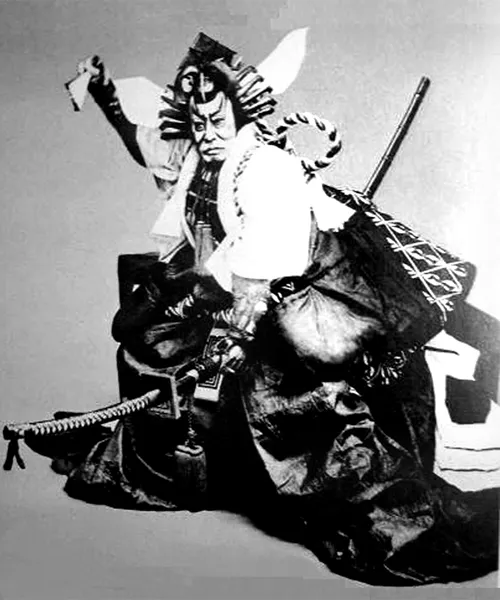
Photo: Unknown authorUnknown author, Public domain, via Wikimedia Commons
The moment a kabuki actor steps onto the hanamichi — the raised runway extending through the audience — Western theatergoers often experience a sensation that is difficult to articulate. The face before them is unmistakably human, yet rendered into something mythic. Bold crimson lines sweep across white skin. Deep indigo shadows pool beneath the brow. The effect is simultaneously beautiful and unsettling. This is kumadori, and once you understand its language, kabuki will never look the same.
Kumadori, which translates roughly as "taking the shadows," is the specialized makeup system developed within kabuki theater during the Edo period (1603–1868). Unlike Western theatrical makeup, which largely aims to enhance natural features under stage lighting, kumadori operates as an independent symbolic system. Every color choice, every brushstroke, every exaggerated line carries encoded meaning — communicating moral alignment, supernatural status, emotional temperature, and social rank to an audience trained to read these signals from childhood.
For American audiences approaching kabuki for the first time, whether through a touring production, a streaming archive, or a cultural festival, kumadori can feel overwhelming. This guide offers a practical key to that visual vocabulary.
The White Canvas: Where Every Story Begins
Before any color is applied, the actor's face is covered in a thick white base called oshiroi, traditionally made from white powder mixed with water. This blank foundation is not neutral — it communicates that the character inhabits a heightened, non-naturalistic world. In classical Western terms, it signals that the audience has stepped outside ordinary reality.
For heroes and noble figures, this whiteness suggests purity and elevated status. For certain ghost characters, the same base takes on an eerie, pallid quality. Context is everything, and the colors layered on top of the white ground shift its meaning entirely.
The Meaning of Red: Virtue, Passion, and Righteous Power
Red kumadori lines — beni — are most closely associated with heroic male characters. When you see a figure with bold red streaks radiating from the nose outward across the cheeks and forehead, you are almost certainly looking at a hero of extraordinary physical and moral strength. The red lines represent the flush of righteous blood surging through a virtuous warrior.
The iconic character Kamakura Gongorō Kagemasa, celebrated in the aragoto (rough-style) play Shibaraku, is perhaps the most recognizable example. His exaggerated red kumadori is so bold it extends down the neck and onto the chest, a visual declaration of superhuman virtue. American audiences who have seen images of kabuki in popular media — on magazine covers, in film references, or in museum exhibitions — have almost certainly encountered this specific look.
Shades of red also appear in roles depicting passionate love, righteous anger, and intense physical exertion. The intensity of the hue matters: a deeper, almost burgundy tone can suggest a more complex or morally ambiguous heroism.
Indigo and Blue: Villainy, Supernatural Menace, and Death
Where red signals virtue, indigo and blue tones signal their opposite. Blue-toned kumadori — aibeni — marks characters who embody cruelty, supernatural threat, or corrupted power. Villains, demons, and spirits of vengeance often wear these cooler shades, and the contrast with a red-painted hero creates an immediate visual tension that requires no translation.
The supernatural figure Tenjiku Tokubei in the play Tenjiku Tokubei Ikoku Banashi offers a compelling example. His blue-tinged makeup communicates otherworldly menace before he speaks a word, preparing the audience for a character who exists at the boundary between the human and spirit worlds.
Blue is also associated with corpses and the recently dead, a convention that resonates interestingly with Western theatrical traditions — think of the pallid, blue-shadowed makeup applied to ghosts in European Gothic performance traditions.
Brown and Black: Demons, Monsters, and the Truly Supernatural
If blue suggests the dangerous supernatural, brown and black kumadori marks something further still from the human. These earth-toned and darkened patterns appear on oni (demons), fearsome divine beasts, and characters whose nature is entirely removed from ordinary morality. The patterns here tend to be more angular and fragmented, reflecting a nature that is wild and untamed.
The kirin-momi style, featuring sharp black lines against white, is associated with characters of immense and dangerous power — figures who might be protectors or destroyers depending on the narrative's demands. There is a deliberate ambiguity in these designs that reflects Japanese spiritual traditions, in which power itself is neither good nor evil until directed.
The Architecture of Lines: Direction and Emotion
Beyond color, the direction and curvature of kumadori lines carry their own emotional data. Upward-sweeping lines energize a face, suggesting aggression, heroism, and active emotion. Downward-curving lines create a sorrowful, defeated, or villainous quality — a face weighted by cruelty or grief.
The area around the eyes receives particular attention. Lines drawn upward from the outer corners of the eyes produce a fierce, alert expression. Lines pulled downward create an impression of sadness or treachery. When watching kabuki, training your attention on the eye region of a character's kumadori will quickly reveal their emotional state in any given scene.
Gender, Status, and the Absence of Paint
It is worth noting what kumadori is not. Female characters in kabuki — historically played by male actors called onnagata — typically do not wear kumadori at all. Their makeup is delicate and naturalistic by comparison: soft pink tones, subtle shading, restrained line work. This contrast is itself a statement. The elaborate kumadori of male characters reflects a world of exaggerated masculine force; the refined simplicity of female makeup represents a different kind of power — one rooted in emotional subtlety and social grace.
Lower-status characters and comic figures similarly wear simplified or parodic versions of kumadori, reinforcing the system's function as a social map as much as an emotional one.
Watching Kumadori in Practice
For American audiences preparing to attend a kabuki performance — or to watch archival footage through platforms such as the National Theatre of Japan's digital archives or Japan Arts Council streaming resources — a few practical suggestions will deepen the experience considerably.
Arrive early and study the program. Most English-language kabuki programs produced for touring productions include character guides that identify the kumadori style for major roles. Cross-referencing these descriptions with what you see onstage transforms passive viewing into active reading.
Watch the actor's face during moments of dramatic stillness. The mie — a frozen, exaggerated pose that punctuates key moments in aragoto plays — is specifically designed to hold the audience's gaze on the kumadori. These pauses are invitations to read the painted face at length.
Finally, allow yourself to respond emotionally before intellectually. Kumadori was designed to communicate directly to the nervous system, to produce an immediate feeling of virtue, menace, sorrow, or awe. The analytical framework this guide provides is meant to deepen that response, not replace it.
Kabuki's genius lies in its refusal to separate the beautiful from the meaningful. Every painted line is both art and argument, both decoration and declaration. Once you learn to read kumadori, you will find that the stage speaks to you before the performance even begins.