Less Is More: How Japanese Performance Principles Are Quietly Revolutionizing Broadway Choreography
For much of its history, Broadway choreography has operated on a principle that might be summarized in a single word: more. More dancers, more lifts, more synchronized kicks, more pyrotechnic staging designed to elicit gasps from the back row of a two-thousand-seat house. The maximalist aesthetic has long been the dominant dialect of American musical theater movement — a language shaped by the demands of spectacle, the expectations of audiences, and the commercial imperative to deliver visible value for a premium ticket price.
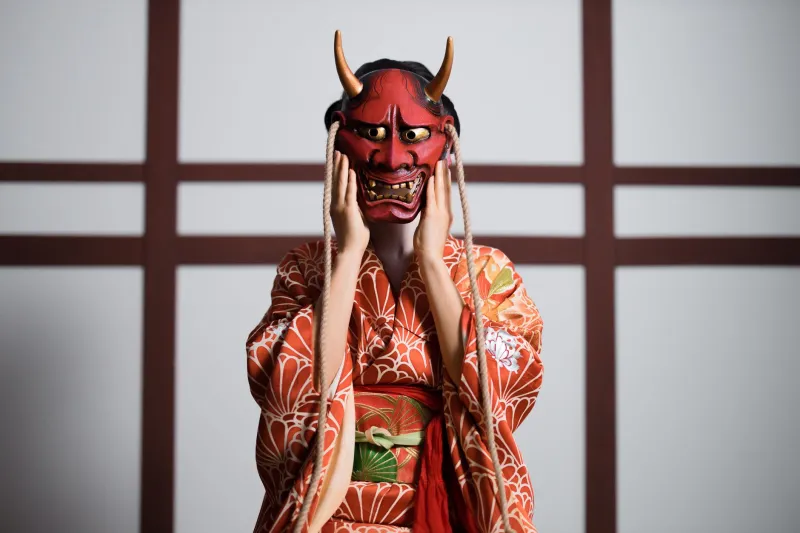
Yet something is shifting beneath the surface of that tradition. A growing cohort of Broadway choreographers is turning toward a radically different set of principles — ones rooted not in the showstopping traditions of Fosse or Tharp, but in the centuries-old movement philosophies of Japanese performance forms such as Noh theater and Butoh. The result is a choreographic vocabulary that prizes restraint over extravagance, negative space over density, and emotional precision over kinetic excess.
The Grammar of Stillness
To understand what Broadway is borrowing, one must first understand what Japanese performance traditions are offering. In classical Noh theater, movement is stripped to its most essential form. Practitioners spend years — sometimes decades — learning to walk across a stage in a manner that communicates entire emotional landscapes through the most economical possible means. A slight tilt of the head, a measured pause before a gesture is completed, the deliberate withholding of movement at a moment when an audience expects release: these are not absences of choreography but its most sophisticated expressions.
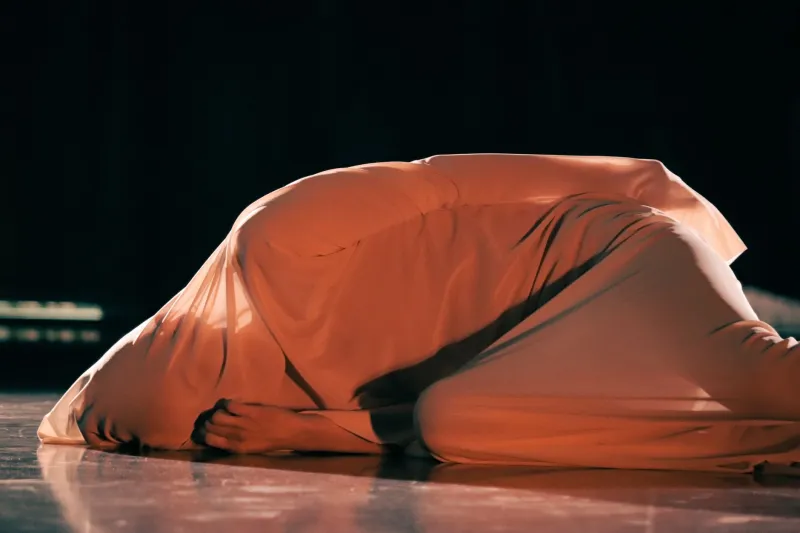
Butoh, the postwar Japanese avant-garde form that emerged from the ashes of mid-twentieth-century trauma, operates from a similarly intense engagement with the body's interior states. Where Noh refines and codifies, Butoh excavates — asking performers to locate movement in sensation, memory, and psychological texture rather than in the execution of predetermined steps. Both traditions share a fundamental conviction that what a body does not do is as meaningful as what it does.
For choreographers trained in the American tradition, encountering these principles can be genuinely disorienting. The impulse to fill space, to sustain energy through constant motion, to demonstrate virtuosity through visible effort — these instincts run deep in the Broadway DNA. Learning to resist them requires not merely a technical adjustment but a philosophical reorientation.
Negative Space as Dramatic Architecture
The concept of negative space — familiar in visual art as the area surrounding and defined by the subject — translates into choreography as the strategic use of stillness, delay, and spatial emptiness to create meaning. Japanese performance traditions have developed this concept with extraordinary sophistication, treating the pause not as a gap between movements but as a movement in its own right.
When applied to Broadway contexts, this principle produces effects that can be startling in their emotional impact. A solo performer who stands motionless at center stage while music swells around them — trusting the stillness rather than filling it — creates a gravitational pull that no amount of choreographic busyness can replicate. The audience's attention, given nothing to track kinetically, turns inward, toward the performer's internal state. The dramatic temperature rises precisely because the external temperature has dropped.
This is the paradox that Japanese movement philosophy illuminates with particular clarity: restraint, applied with precision and intention, generates intensity. The controlled gesture communicates more than the uncontrolled one because it implies the existence of forces being held in check — and audiences feel those forces even when they cannot see them.
Precision as Emotional Language
Beyond stillness, Japanese performance traditions offer Broadway choreographers a model of precision that differs fundamentally from the athletic precision valued in conventional American musical theater. In Noh, precision is not about the accurate execution of a technically demanding move. It is about the exact calibration of a gesture's quality — its speed, its weight, its spatial trajectory, its relationship to the breath — to produce a specific emotional resonance.
This distinction matters enormously in practice. A choreographer working from Japanese principles does not ask a performer to execute a turn correctly; they ask the performer to locate the precise quality of energy — where it originates in the body, how it travels through the limbs, where it dissipates — that will make the turn carry a particular emotional meaning. The external form may look simple, even minimal, to an untrained eye. The internal specificity required to produce it is immense.
For Broadway performers accustomed to prioritizing technical execution, this shift in emphasis can be liberating. It relocates the site of choreographic achievement from the visible surface of the body to its invisible interior, inviting a kind of physical intelligence that theatrical training does not always cultivate.
The Challenge of Transposition
None of this is to suggest that the borrowing is uncomplicated. Japanese performance traditions are embedded in cultural contexts, philosophical frameworks, and pedagogical lineages that cannot simply be extracted and transplanted into a Broadway production without significant transformation — and without risk of distortion.
Noh, for instance, is inseparable from its relationship to Zen Buddhist concepts of impermanence and the cultivation of a particular quality of awareness known as ma — a term that encompasses interval, pause, and the charged space between events. To deploy Noh-derived movement principles in a Broadway context without any engagement with the philosophical substrate from which they grew is to work with the form while discarding the content. The results can be aesthetically interesting while remaining philosophically hollow.
The more thoughtful choreographers working in this space are aware of this tension and treat it with appropriate seriousness. Rather than simply importing techniques, they engage with the underlying principles — studying the traditions in depth, working with practitioners trained in those traditions, and asking hard questions about what it means to adapt rather than merely appropriate.
A Broadening Vocabulary
What Japanese performance philosophy ultimately offers Broadway is not a replacement for its existing movement language but an expansion of it. The maximalist tradition is not wrong; it is simply incomplete. A choreographic vocabulary that encompasses both the full-company showstopper and the single motionless figure commanding a stage through sheer internal presence is richer, more flexible, and more capable of the full range of human emotional expression than one that knows only how to turn up the volume.
The productions that are beginning to reflect this expanded vocabulary — those in which stillness is trusted, gesture is refined rather than amplified, and the performer's internal life is treated as the primary choreographic material — suggest what American musical theater might become as it continues to absorb and transform the lessons of Japanese performance traditions.
For audiences willing to meet that work on its own terms, the experience can be revelatory. Theater that trusts silence to speak, that allows restraint to carry emotional weight, that treats the body as an instrument of precision rather than spectacle — this is theater that asks something of its audience and, in asking, offers something profound in return. It is, in the deepest sense, what both traditions — Japanese and American — have always been capable of at their best.