Thunder From the East: How Taiko Drumming Is Rewriting the Rules of American Concert Performance
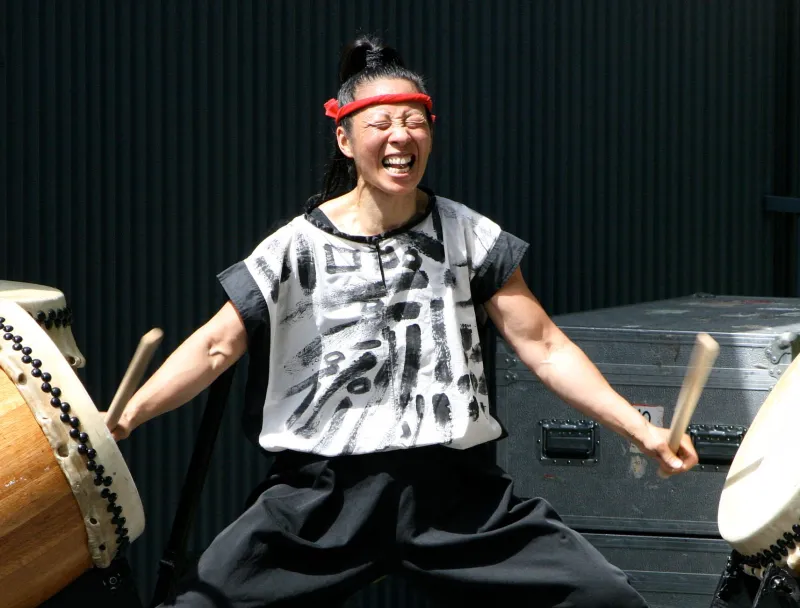
There is a moment, familiar to anyone who has witnessed a live taiko performance, when the sound stops being something you hear and becomes something you feel. The low, resonant boom of the ō-daiko — the largest of the traditional Japanese drums — does not merely fill a concert hall. It occupies the body. Ribcages vibrate. Floors tremble. And audiences accustomed to the careful, measured decorum of Western orchestral performance find themselves leaning forward, instinctively, as though drawn toward something primal and irresistible.
This is the quiet conquest of taiko drumming in America. Quiet, that is, only in the sense that it has arrived without fanfare from mainstream music criticism. In every other respect, taiko is thunderous — and it is growing louder.
From Festival Grounds to Concert Stages
For much of the twentieth century, taiko in the United States existed primarily within Japanese American community contexts. Groups like San Jose Taiko, founded in 1973, and Kinnara Taiko, established the same year in Los Angeles, were rooted in a specific cultural mission: preserving and celebrating Japanese heritage in communities that had endured the trauma of wartime incarceration. Their performances were acts of both artistry and reclamation.
That foundational purpose has never disappeared. But the geography of taiko performance has expanded dramatically. Today, ensembles such as TAIKOPROJECT, based in Los Angeles, and Soh Daiko in New York City are performing at venues that would have seemed improbable a generation ago — from Lincoln Center's outdoor festivals to the Hollywood Bowl, from university concert series to collaborative billing with jazz orchestras and electronic music producers.
The shift reflects a broader appetite among American audiences for performance that engages the full sensorium. In an era when streaming has made passive listening the default mode of musical consumption, live taiko offers something that cannot be replicated through speakers: physical presence as artistic medium.
A Discipline That Begins With the Body
What separates taiko from the percussion traditions that American concert audiences typically encounter is not simply instrumentation or cultural origin. It is the fundamental philosophy of what a performer's body is for.
In Western orchestral training, the percussionist's body is, to a significant degree, a technical apparatus — a mechanism for producing precise, controlled sound at designated moments. Economy of movement is generally prized. The musician serves the score.
Taiko inverts this hierarchy entirely. The performer's stance, the arc of the bachi — the drumstick — through the air, the breath that precedes each strike: all of these are considered as integral to the performance as the sound itself. The Japanese concept of ki, roughly understood as vital energy or life force, is not metaphor in taiko practice. It is a technical concern. Teachers speak of it in practical terms, coaching students on how breath and posture affect the quality and projection of each stroke.
For American musicians encountering taiko for the first time, this reorientation can be disorienting in the most productive sense. Marcus Reeves, a percussionist who trained at the Berklee College of Music and has since studied with a Los Angeles-based taiko ensemble, described the experience with characteristic directness: "I had spent years learning to disappear behind the music. Taiko told me that I was the music. That my body was an instrument before I ever touched the drum."
This is not an isolated testimony. Across the country, classically trained percussionists, rock drummers, and hip-hop producers are arriving at taiko with sophisticated technical backgrounds — and finding that those backgrounds provide both advantage and obstacle. The hands are prepared. The ego, often, is not.
Communal Sound in an Age of Individualism
Beyond its physical demands, taiko practice carries a social dimension that cuts against the grain of American musical culture in instructive ways. The ensemble is not a collection of soloists who happen to share a stage. It is, ideally, a single organism — one in which individual virtuosity is meaningful only insofar as it serves collective coherence.
This ethos has roots in the Japanese concept of kumi daiko, or group drumming, which was systematized in the mid-twentieth century by figures such as Daihachi Oguchi, whose innovations transformed taiko from a largely ceremonial practice into a performance art form capable of sustaining a concert program. What Oguchi understood, and what contemporary ensembles continue to demonstrate, is that the drama of taiko is relational. The tension and release that moves an audience is generated not by any single drummer, but by the conversation between them.
For American audiences shaped by a popular music culture that has long fetishized the individual performer — the guitar hero, the rap virtuoso, the diva — this communal model can be revelatory. TAIKOPROJECT has spoken publicly about designing their performances to draw audiences through a narrative arc that is fundamentally ensemble-driven, resisting the temptation to center any single member regardless of technical brilliance.
Crossover Audiences and Cultural Dialogue
One of the more striking developments in American taiko's recent trajectory is the diversity of the audiences it is attracting. Concert programmers report that taiko events draw listeners from classical music backgrounds alongside fans of rock, metal, and electronic music — demographics that rarely occupy the same hall simultaneously.
This crossover appeal is not accidental. Taiko's sonic range is genuinely vast. At one end, the delicate interplay of smaller drums and hand percussion can evoke the intimacy of chamber music. At the other, a full ensemble performing at full intensity generates decibel levels and physical impact that rival stadium rock. The form is, in this sense, remarkably elastic — capable of meeting audiences where they are while simultaneously pulling them somewhere new.
Several ensembles have leaned deliberately into this elasticity, collaborating with jazz musicians, string quartets, and electronic composers. These partnerships are not always seamless, and the most honest practitioners acknowledge the creative friction involved. But that friction, more often than not, produces something neither tradition could have achieved independently.
What American Stages Are Learning
The broader implications of taiko's American ascent extend beyond the percussion world. Theater directors, choreographers, and performance designers are increasingly drawing on taiko's integration of sound, movement, and spatial awareness as a model for rethinking what live performance can demand of both artist and audience.
At Chiruran Butai, we have long observed that Japanese performing arts carry within them a set of assumptions about presence, discipline, and collective energy that challenge American performance culture in productive ways. Taiko is perhaps the most viscerally immediate example of this dynamic — an art form that makes its argument not through language or narrative, but through the body and the drum.
The revolution, as revolutions often do, announced itself gradually. But listen carefully. The thunder is already here.