Beautifully Broken: How Japan's Embrace of Imperfection Is Setting American Performers Free
There is a particular kind of silence that falls over an American audition room when something goes unexpectedly, beautifully wrong. A voice cracks on a high note. A pause stretches two beats longer than the script demands. A hand trembles slightly during an otherwise controlled monologue. In most professional contexts, these moments are classified as errors — evidence of insufficient preparation or fraying nerves. The performer files them away as failures to be corrected before the next call.
But what if those very moments were the performance?
That question sits at the heart of a growing conversation among American theater artists who have begun drawing from one of Japan's most quietly radical aesthetic traditions: the embrace of imperfection not as a flaw to be forgiven, but as a quality to be honored, even cultivated. The philosophy animating this shift reaches deep into Japanese cultural history, touching disciplines as varied as ceramics, calligraphy, garden design, and — with increasing relevance — live performance.
The Aesthetic of the Unfinished
Japanese artistic culture has long held that beauty is not diminished by irregularity — it is, in many cases, defined by it. The tea ceremony tradition introduced the concept of wabi, a quiet appreciation for the rustic and the incomplete. Lacquerware repaired with gold through the practice of kintsugi does not hide its fractures; it illuminates them, treating breakage as part of an object's history rather than its disgrace. The raked gravel of a Zen garden is never perfectly symmetrical, because perfect symmetry signals something mechanical rather than alive.
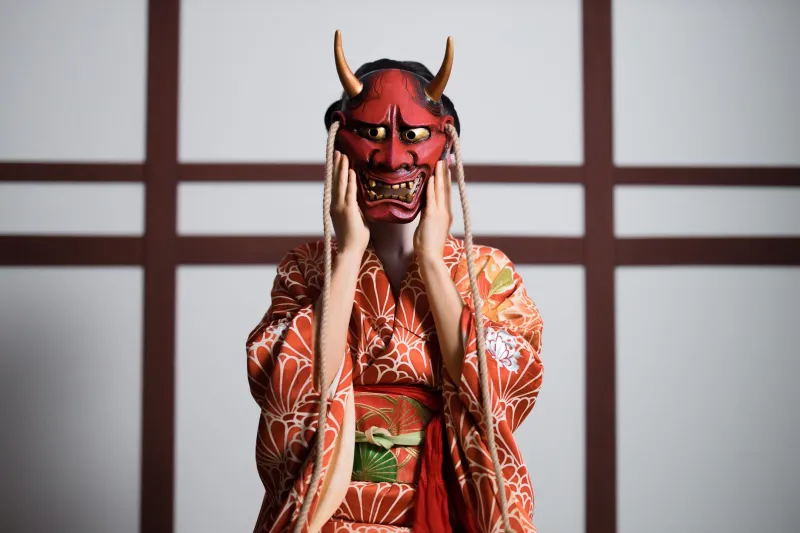
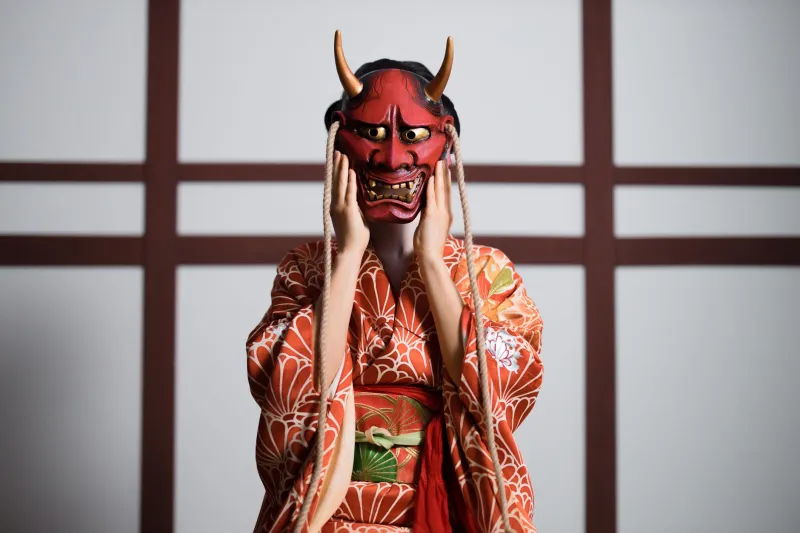
This sensibility extends naturally into the performing arts. In Noh theater, the deliberate asymmetry of movement — the slightly uneven weight distribution, the fractional hesitation before a gesture completes itself — is not corrected in rehearsal. It is refined. The actor learns to inhabit the irregular, to make the imprecise feel inevitable. The result is a quality of presence that audiences describe not as flawless but as true.
For American performers trained in traditions that prize technical exactitude, this represents something close to a philosophical inversion.
The Tyranny of the Ten
American entertainment culture has constructed an elaborate mythology around perfection. From the Broadway audition circuit to the Hollywood screen test, performers are evaluated against idealized standards — ideal pitch, ideal physique, ideal diction, ideal emotional control. Coaching culture reinforces this orientation: the goal of most training is to eliminate the variable, to produce a performer who can deliver the same result, at the same level, eight times a week.
This system produces extraordinary technical proficiency. It also, many working artists now argue, produces a particular kind of emotional distance. When a performance has been engineered to eliminate all traces of uncertainty, it can paradoxically feel less human — a demonstration of capability rather than an act of genuine presence.
The theater director and educator Anne Bogart, whose work has long engaged with Japanese performance philosophy, has spoken about the difference between a performance that is controlled and one that is alive. Control, she has noted, can read as safety — and safety, on stage, is rarely interesting. What audiences respond to most viscerally is the sense that something real is at stake, that the performer is genuinely in the moment rather than executing a pre-determined sequence.
Imperfection, in this light, is not the enemy of presence. It may be its precondition.
Japanese Theater's Quiet Lesson
American directors and performers who have spent time studying or collaborating with Japanese theater companies frequently return with a recalibrated relationship to the unplanned. They describe watching Noh actors whose stillness contains something trembling within it — not weakness, but aliveness. They speak of Butoh performances in which the body's natural asymmetries are not corrected but amplified, turned into a kind of raw vocabulary.
In Kabuki, even the most formally codified tradition in Japanese theater, veteran actors speak of the space between the choreographed and the spontaneous — the moment within a precisely rehearsed sequence where something personal and unrepeatable occurs. That moment is not considered a departure from the art form. It is considered its highest expression.
The practical implications for American performers are significant. Several training programs across New York, Los Angeles, and Chicago have begun incorporating elements of Japanese aesthetic philosophy into their curricula — not as exotic supplementary material, but as a corrective to what some instructors describe as an over-reliance on technical polish at the expense of genuine vulnerability.
At one prominent New York conservatory, students are now assigned exercises in which they are explicitly prohibited from correcting mistakes during performance. The stumble, the mispronounced word, the unintended silence — all must be inhabited rather than recovered from. The goal is not sloppiness. It is the cultivation of a performer who is present enough to turn the unexpected into meaning.
Cracks as Character
What Japanese aesthetic philosophy offers, at its most practical, is a framework for understanding imperfection as information rather than failure. The crack in the ceramic reveals how the clay responded to heat. The asymmetry in the garden reflects the hand that raked it. The tremor in the actor's voice tells us something about what the character is carrying.
This reframing has particular resonance at a moment when American audiences — saturated by the hyper-produced spectacle of streaming content and stadium-scale entertainment — are demonstrating a renewed appetite for theatrical experiences that feel unmediated and genuinely human. The success of intimate theater formats, verbatim performance, and documentary-style productions all point toward an audience hunger for the real, even when the real is rough-edged.
Performers who have internalized this philosophy describe a fundamental shift in their relationship to stage fright. When perfection is no longer the goal, the fear of imperfection loses much of its power. What remains is something closer to genuine curiosity — a willingness to discover what will happen rather than anxiety about whether what happens will be correct.
A Different Standard of Excellence
None of this is an argument against craft, discipline, or preparation. Japanese theater traditions are among the most rigorously demanding in the world. The Noh actor trains for decades before achieving the economy of expression that makes a performance appear effortless. The point is not that preparation is unnecessary, but that preparation can be oriented toward different ends — not the elimination of the human variable, but its deepening.
The American performer who absorbs this lesson does not become a less skilled artist. In many cases, they become a more interesting one. They learn to distinguish between the imperfections that arise from insufficient preparation and those that arise from genuine presence — from being, in the truest sense, in the room.
Japanese theater has understood for centuries that the most beautiful things are rarely the most perfect ones. They are the ones that carry within them the evidence of their own becoming — the mark of the hand, the weight of time, the tremor of something genuinely alive.
American theater is beginning, slowly and with great promise, to learn the same.