Beyond the Language Barrier: Why Japanese Theater Travels to American Stages More Gracefully Than Expected

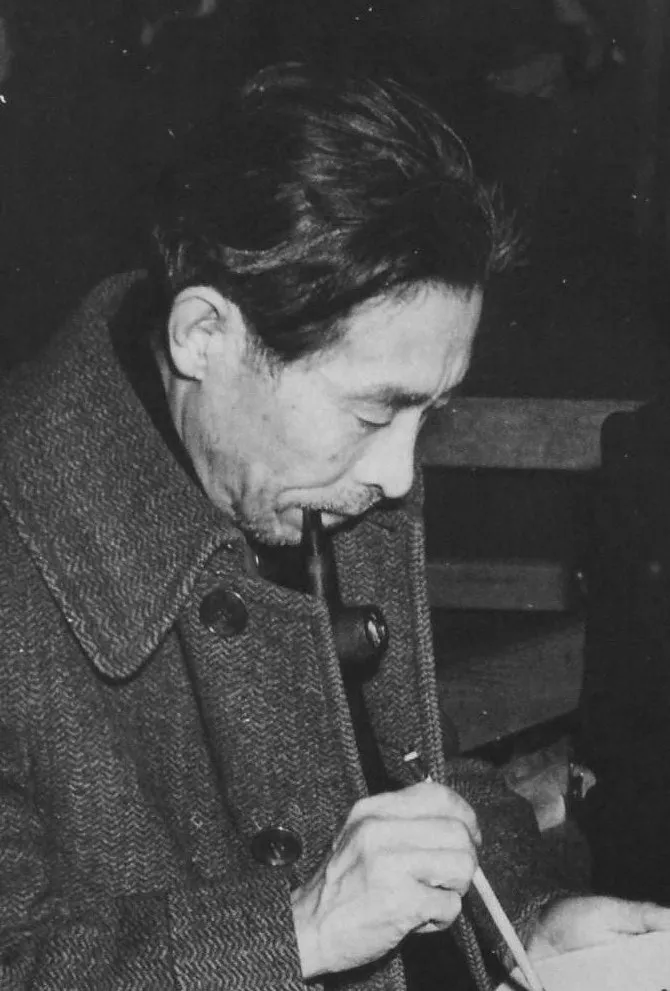
Photo: Yoshiyuki Ito, CC BY-SA 3.0, via Wikimedia Commons
When a production of Kōji Uno's The House of Sleeping Beauties was staged at a mid-sized theater in Los Angeles several years ago, the producing team braced for audience confusion. The work drew on distinctly Japanese literary and cultural reference points. The adaptation had required months of dramaturgical negotiation. And yet, by most accounts, the production landed with an emotional clarity that surprised everyone involved — including the adapters.
This experience is not an isolated one. Across American stages, from regional theaters in the Pacific Northwest to experimental spaces in Brooklyn, Japanese theatrical works are demonstrating a capacity to cross cultural and linguistic boundaries that confounds the conventional wisdom about the limits of translation. Understanding why this happens — and how the most successful adaptations manage it — offers a compelling window into both the universality of certain theatrical languages and the particular genius of Japanese dramatic form.
What Gets Lost — and What Doesn't
The standard anxiety about translating Japanese theater for American audiences centers on specificity. Japanese dramatic works, whether drawn from the Shinpa melodrama tradition of the Meiji era or the contemporary avant-garde output of companies like Chelfitsch, are saturated with cultural reference: particular social hierarchies, specific aesthetic conventions, deeply embedded historical contexts. The fear is that stripping or simplifying these references for Western audiences will hollow out the work — leaving only a surface impression of something that was once dense with meaning.
Translator and dramaturg Keiko Arimoto, who has worked on American adaptations of several contemporary Japanese plays, argues that this fear, while understandable, frequently misunderstands the nature of theatrical communication. "When we read a play, we encounter language first," she explains. "But when we watch a play, we encounter bodies, space, rhythm, and image. Japanese theater — even contemporary Japanese theater — is extraordinarily sophisticated in its use of these non-linguistic channels. Much of what feels untranslatable on the page arrives perfectly intact on the stage."
This distinction between the literary and the theatrical is crucial. Shinpa, for instance, is frequently described as melodrama — a term that, in American critical discourse, carries connotations of excess and sentimentality. But Shinpa's emotional architecture is not simply about heightened feeling; it is about the precision with which feeling is externalized through gesture, posture, and spatial relationship. These elements translate with remarkable fidelity, because the human body's expressive vocabulary, while culturally inflected, is not culturally exclusive.
The Adapter's Craft: Finding the Emotional Core
The most successful American adaptations of Japanese theatrical works tend to share a common methodology: rather than attempting a line-by-line fidelity to the source text, they identify the emotional and thematic architecture of the work and reconstruct it using materials that resonate with American audiences.
This approach demands a particular kind of dramaturgical intelligence — one that can hold two cultural contexts simultaneously without collapsing either into the other. Director James Whitfield, whose production of a Seinendan text ran for three weeks at a Chicago theater, describes the process as one of "finding the pressure points."
"Every Japanese play I've worked on has moments where the cultural specificity is so dense that direct translation would require a footnote," Whitfield says. "But beneath that specificity, there's always an emotional logic that is entirely legible — grief, obligation, desire, shame. Our job as adapters is to find the staging language that communicates that logic without requiring the audience to have a PhD in Japanese cultural history."
This is not, Whitfield is careful to note, the same as domesticating the work — replacing Japanese cultural content with American equivalents in a way that erases the work's origin. The most effective adaptations maintain a quality of cultural strangeness that is itself meaningful. American audiences, encountering theatrical conventions that differ from their own, are invited into a productive disorientation — a state of heightened attention that can make even familiar emotional territory feel newly vivid.
Physical Storytelling as Universal Language
Perhaps the most significant factor in the successful American reception of Japanese theater is the tradition's deep investment in physical storytelling. From the formalized gesture systems of classical forms to the hyper-naturalistic but precisely choreographed physicality of contemporary companies like Chelfitsch, Japanese theater consistently treats the body as a primary — rather than secondary — instrument of meaning.
This emphasis communicates across linguistic boundaries in ways that verbal text cannot. When Toshiki Okada's work, with its deliberately awkward, overlapping dialogue and its actors' studied physical disconnection from their own speech, was staged in English, American audiences reported an uncanny sense of recognition — not of specific cultural content, but of a particular texture of contemporary experience: distraction, fragmentation, the difficulty of genuine presence.
"What Okada is describing is not uniquely Japanese," says theater critic Sandra Mehta, who reviewed several American productions of Japanese contemporary work for a major arts publication. "He's describing a condition of modernity that American audiences inhabit every day. The physical language he uses to stage that condition is strange, yes — but strange in a way that illuminates rather than alienates."
A Practical Guide for Curious Theatergoers
For American audiences encountering Japanese theatrical works for the first time, a few orientations can significantly enhance the experience.
Resist the impulse to decode. Japanese theater frequently operates through accumulation and atmosphere rather than linear narrative. Allowing meaning to arrive through sensation rather than analysis is often more rewarding than trying to construct a conventional story arc.
Pay attention to space and silence. The relationship between performers and the stage space, and the quality of silence between and within scenes, carries as much information as dialogue. This is especially true in productions influenced by classical Japanese forms.
Use available production materials. Many American productions of Japanese works provide dramaturgical notes that offer cultural context without being prescriptive about interpretation. These are worth reading before the performance, not after.
Trust the body. When the verbal content feels opaque, the physical performance almost always provides a legible emotional through-line. Japanese theater's investment in physical precision means that even when language fails to translate fully, the body rarely does.
The growing presence of Japanese theatrical works on American stages is not simply a cultural exchange program made flesh. It is evidence of something more fundamental: that certain theatrical languages, however culturally specific their origins, possess a capacity for universal address that no border — linguistic, geographic, or cultural — can fully contain.