The Ancient Playbook: How Noh Theater's Hidden Principles Are Quietly Shaping American Film and Television

Photo by Photo by Michel Catalisano on Unsplash on Unsplash
Consider a scene that many American viewers would describe simply as "masterful acting": a character stands in medium shot, expression almost unreadable, while another character delivers terrible news. The camera holds. Nothing moves except the faint tremor of breath. The audience leans forward. Something in the stillness is unbearable.
What viewers are responding to, without knowing it, may have a name nearly seven centuries old. They are responding to jo-ha-kyū—the rhythmic philosophy at the heart of Japanese noh theater.
What Noh Actually Is
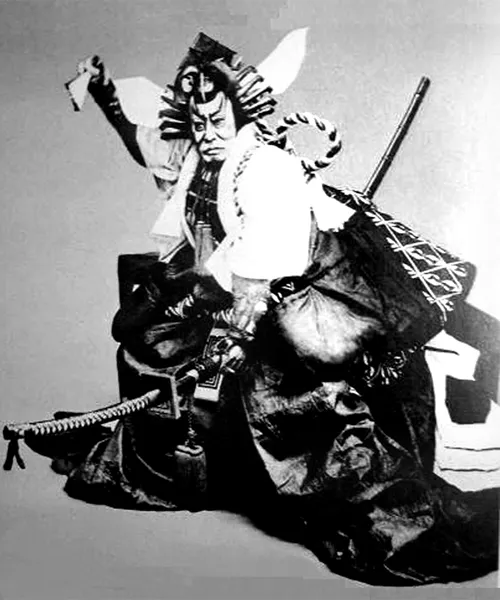
For American audiences unfamiliar with the form, noh is Japan's oldest surviving theatrical tradition, formalized in the fourteenth century by the playwright-performer Zeami Motokiyo and his father Kan'ami. Performed by masked actors in elaborately embroidered robes on a spare wooden stage, noh operates at a pace and register entirely unlike Western theatrical convention. A single performance can last several hours. A protagonist may take minutes to cross the stage. Dialogue is chanted rather than spoken. Gesture is codified, symbolic, and extraordinarily precise.
To an uninitiated Western observer, noh can appear almost perversely inaccessible. Yet the principles underlying its construction—the management of tempo and tension, the use of symbolic space, the relationship between restraint and emotional impact—are not culturally specific. They are, as a growing number of American directors are discovering, universally applicable tools for storytelling.
Jo-Ha-Kyū: The Rhythm Beneath Everything
The concept of jo-ha-kyū (introduction, development, rapid conclusion) is noh's foundational rhythmic principle, governing everything from the structure of an individual gesture to the architecture of an entire performance cycle. In practical terms, it describes a movement from slowness and deliberate preparation through gathering momentum to a moment of concentrated release.
American directors who have studied noh consistently identify jo-ha-kyū as the principle with the most immediate practical application to screen storytelling. "When I first encountered it in a workshop context, I recognized it immediately as something I had been trying to achieve intuitively for years," says one television director who has worked extensively in prestige drama and requested anonymity to speak candidly about influences on their work. "It explained why certain scenes I had cut felt wrong even when they were technically well-executed. I was rushing the jo."
This insight—that the deliberate, unhurried establishment of a scene's initial conditions is not preamble but essential architecture—has found its way into the editing rooms of several notable American productions. The extended, nearly wordless opening sequences that have become a hallmark of prestige television drama owe more to this principle than most of their creators would acknowledge.
The Ma of the American Screen
Equally influential is noh's concept of ma—a term that translates inadequately as "negative space" or "meaningful pause" but that in practice describes the charged interval between actions, sounds, or words. In noh performance, ma is not emptiness but a kind of active suspension, a held breath that carries as much dramatic weight as the gesture that precedes or follows it.
The application of ma to film editing is immediately legible to anyone who has studied both forms. The director who allows a cut to breathe—who resists the temptation to fill every frame with action or dialogue—is working in the spirit of ma, whether or not they have ever set foot in a noh theater.
Film scholar and Japan-based cultural consultant Naomi Hargreaves, who has consulted for several major American productions seeking to incorporate Japanese aesthetic principles, notes that ma is frequently the first concept she introduces to Western directors. "It is the most immediately useful and the most difficult to trust," she observes. "American production culture has a profound anxiety about silence and stillness on screen. Noh teaches that this anxiety is the enemy of emotional impact."
Symbolic Gesture and the Economy of Meaning
Noh's system of kata—codified, symbolic gestures inherited through centuries of transmission—offers a different kind of lesson for American directors. In noh, a single small gesture carries precise, agreed-upon meaning: a raised hand before the face indicates weeping; a slow turn of the masked head transforms the audience's understanding of what the character perceives. The economy is radical. Nothing is wasted.
For directors working in a medium where the camera can isolate and magnify the smallest physical detail, this economy is not merely aesthetically appealing—it is practically powerful. Several directors associated with prestige American television drama have worked with movement coaches drawing on Japanese theatrical traditions, including noh, to train their actors in the expressive potential of minimal gesture.
The results are visible in performances that critics describe as "contained," "controlled," or "interior"—performances where the camera seems to discover meaning rather than record it. This quality, so highly valued in contemporary screen acting, is in many respects a Western approximation of the aesthetic that noh has cultivated since the fourteenth century.
Staging Space as Symbolic Architecture
Noh theater's approach to staging—the bare wooden platform, the single pine tree painted on the back wall, the bridge connecting the stage to the offstage world—encodes meaning through symbolic spatial relationships rather than realistic set design. Every element of the noh stage carries significance that a knowledgeable audience reads automatically.
American production designers and directors who have engaged with noh report that this approach to space has fundamentally altered how they think about composition. Rather than filling a frame with environmental detail, they have learned to ask what a single, precisely chosen visual element can carry.
This influence is perhaps most visible in the work of American directors who have spent significant time in Japan or who have formal training in Japanese aesthetics. The spare, symbolically loaded visual environments that characterize some of the most critically admired American film and television work of the past decade reflect, at least in part, an encounter with noh's spatial philosophy.
A Living Influence
Noh is not a museum piece waiting to be discovered by American directors. It is a living tradition, performed regularly in Japan and increasingly visible in the United States through touring productions, university residencies, and the work of practitioners who have trained in Japan and brought their knowledge back to American stages and classrooms.
For American directors, producers, and storytellers seeking to develop a more nuanced and emotionally resonant visual language, engagement with noh—whether through formal study, attendance at performances, or simply serious reading in the tradition's extensive theoretical literature—offers returns that are difficult to achieve through any other route.
The principles Zeami codified in the fourteenth century were not time-bound. They were observations about the nature of human attention, emotional response, and the mechanics of theatrical impact. That they are now shaping what American audiences watch on their screens is less surprising, on reflection, than it might initially appear. Good storytelling, it turns out, has always known how to travel.