Voices Across the Pacific: The Japanese Female Playwrights Quietly Transforming American Stages
Photo: Unknown authorUnknown author, Public domain, via Wikimedia Commons
For much of the twentieth century, the story of Japanese theater reaching American audiences was written almost exclusively by men. The canonical figures — the Noh masters, the Kabuki legends, the theatrical innovators who crossed the Pacific to collaborate with Western directors — were overwhelmingly male. The women writing for Japanese stages, producing work of comparable ambition and craft, remained largely invisible to US producers and audiences alike.
That invisibility is beginning to lift. Slowly, unevenly, but with growing momentum, a cohort of contemporary Japanese female playwrights is finding its way onto American stages — and what these writers are bringing with them is not simply a new set of stories, but a fundamentally different way of understanding what theater is for.
A Different Kind of Inheritance
To understand why the work of contemporary Japanese female playwrights carries such distinctive energy, it helps to understand the theatrical inheritance they are writing against — and through.
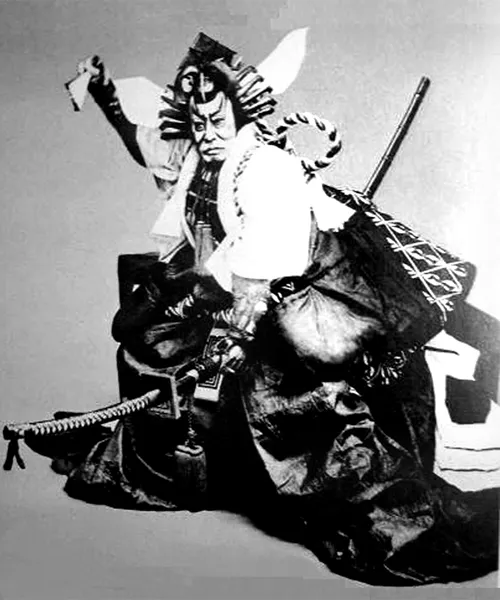
Japanese dramatic tradition has long been shaped by hierarchies that limited women's participation in performance. Classical Noh and Kabuki were, for most of their histories, exclusively male arts. Women were excluded from the stage not incidentally but by formal prohibition. The onnagata tradition — in which male Kabuki performers specialize in female roles — developed precisely because women were absent.
This history has produced, paradoxically, a generation of female playwrights with an acute consciousness of what representation means and what its absence costs. Their work does not simply add women to existing theatrical frameworks. It interrogates those frameworks — asks who built them, who they were built to serve, and what kinds of stories they were designed to make invisible.
Writers to Know
For American audiences encountering this body of work for the first time, several names have emerged as essential points of entry.
Tomomi Mochizuki has become one of the most discussed Japanese female playwrights among US theater professionals in recent years. Her plays, which center on the interior lives of ordinary women navigating the competing demands of family obligation and personal aspiration, have found resonance with American audiences in ways that transcend cultural specificity. Productions of her work at regional theaters in Los Angeles and Seattle have drawn responses from audience members who describe her characters' dilemmas as immediately recognizable despite their distinctly Japanese social contexts.
Mayumi Nakatani, whose work engages more directly with questions of historical memory and collective trauma, has attracted attention from American academic and festival circuits. Her structural experimentation — plays that fragment chronology, blur the boundary between the living and the dead, and draw explicitly on classical Noh dramaturgy — has resonated particularly with directors interested in non-Western theatrical forms.
Risa Takeda, among the younger generation, is writing work that engages directly with questions of diaspora, digital identity, and the experience of being Japanese in a globalized world. Her plays have a contemporary urgency that speaks directly to the experiences of younger American audiences, including Japanese-American communities who have long felt underrepresented in both Japanese and American theatrical traditions.
The Producers Building the Bridges
The arrival of these writers on American stages has not happened organically. It has required the sustained effort of producers, translators, and institutional partners willing to invest in work that arrives without the commercial guarantees of established names.
Organizations such as the Japan Society in New York have played a significant role in creating platforms for contemporary Japanese female playwrights, hosting readings, workshop productions, and panel discussions that introduce US theater professionals to work they might not otherwise encounter. The society's programming has functioned, for many American directors and literary managers, as a first point of contact with a body of work they subsequently pursue independently.
Translation remains one of the central challenges. Japanese drama poses particular difficulties for translators, not only because of the structural differences between the two languages but because the emotional register of Japanese theatrical dialogue — its indirection, its reliance on implication, its discomfort with explicit statement — can be flattened by translation approaches that prioritize clarity over texture. The translators doing the most valuable work in this space tend to have deep familiarity with both theatrical traditions, not merely linguistic fluency.
What American Theater Has Been Missing
The question of why American theater took so long to engage seriously with Japanese female playwrights is worth examining directly, because the answer reveals something about the assumptions that have governed US theatrical internationalism.
For much of the postwar period, American interest in Japanese theater was filtered primarily through the lens of formal innovation. What US directors sought in Japan was technique — the physical discipline of Noh, the visual spectacle of Kabuki, the radical aesthetics of the postwar avant-garde. The content of Japanese drama, and particularly the domestic and social dramas that constituted much of the repertoire of female playwrights, was less legible to American producers looking for the exotic and the formally distinctive.
This has meant that an entire tradition of Japanese theatrical writing — intimate, psychologically nuanced, socially engaged — has been effectively invisible to US stages. The work of contemporary Japanese female playwrights is not simply filling a gap. It is revealing how large that gap was.
Finding These Works
For American theatergoers interested in engaging with this body of work, several avenues are worth pursuing.
- Festival programming remains the most reliable entry point. Events such as the Under the Radar Festival at the Public Theater in New York and the LA Theatre Festival periodically feature work by Japanese female playwrights, often in workshop or reading formats that offer access to new writing before it reaches full production.
- University theater programs, particularly those with strong Asian performance studies components, have been early adopters of this repertoire. Productions at institutions including Yale School of Drama and the University of California system have introduced student audiences to writers not yet visible on professional stages.
- Published translations are increasingly available through academic presses and theater-specific publishers. The Japan Foundation's support for translation projects has expanded the English-language availability of contemporary Japanese dramatic writing significantly in recent years.
A Conversation That Is Just Beginning
The integration of Japanese female playwrights into American theatrical culture is not a completed project. It is a conversation that is only beginning to find its terms. The writers themselves are not passive recipients of American interest; they are active participants in a cross-cultural exchange that is changing both traditions.
What is already clear is that the arrival of these voices on American stages is not a minor addition to an existing repertoire. It is a reorientation — a reminder that the story of Japanese theater reaching the United States is far larger, and far more various, than the version that has been told until now. The women who have been writing in the wings are stepping forward, and American theater will be richer for finally listening.